Are Online Courses as Good as Art School?
Main differences, benefits, and how to choose the right path for you
As online learning becomes more common, many aspiring artists—and the families supporting them—are asking the same question: are online courses as good as art school?
It’s a fair question. Online platforms now offer everything from drawing fundamentals and music theory to advanced creative writing workshops and portfolio reviews. At the same time, traditional art schools continue to be known for immersive training, close mentorship, and strong creative communities.
So how do these two options really compare?
This article takes a clear-eyed look at art school vs online education. We’ll explore what each path offers, the benefits of art school, where online learning shines, and when the two can work together. Whether you’re a student planning your next step or a parent helping guide an important decision, this guide will help you make an informed choice.
Understanding Art School
Traditional art schools are built around one core idea: immersion. From the schedule to the facilities to the peer environment, everything is designed to place art at the center of daily life.
Structured, Progressive Learning
One of the most important art school benefits is structure. Art schools follow carefully designed curricula that build skills over time. Students don’t just jump from one topic to another; they progress through technique, theory, critique, and application in a deliberate sequence.
For example, a visual arts student might begin with foundational drawing and design principles, move into color theory and composition, and later develop a focused body of portfolio work. Music students often follow a similar arc, combining technique, ensemble work, theory, and performance.
This structure removes guesswork. Students know what they’re working toward and how each class contributes to their growth.
In-Person Mentorship and Feedback
Art school instruction is deeply hands-on. Faculty members assign work and then follow it to completion, observing students express their artistry in real time. A dance instructor can adjust posture immediately. A writing teacher can respond to the tone of a piece during a live workshop. A film instructor can troubleshoot lighting or sound issues on the spot.
This level of in-person mentorship is a defining part of the benefits of art school. Students receive constant feedback, both formal and informal, which accelerates learning and builds confidence.
Professional Facilities and Resources
Art schools provide access to facilities most students simply don’t have at home. These may include:
- Large studios designed for specific media
- Performance halls and recital spaces
- Film and recording studios
- Editing labs and production equipment
- Exhibition galleries
Working in professional-grade spaces helps students understand industry standards and prepares them for future creative environments.
A Creative Community
Another major advantage of traditional art schools is community. Students are surrounded by peers who are equally committed to their craft. Collaboration becomes part of daily life—through rehearsals, critiques, group projects, and performances.
This environment can be transformative. Students learn from each other’s strengths, push each other creatively, and build lasting relationships. These connections often turn into professional networks long after graduation.
Understanding Online Art Courses
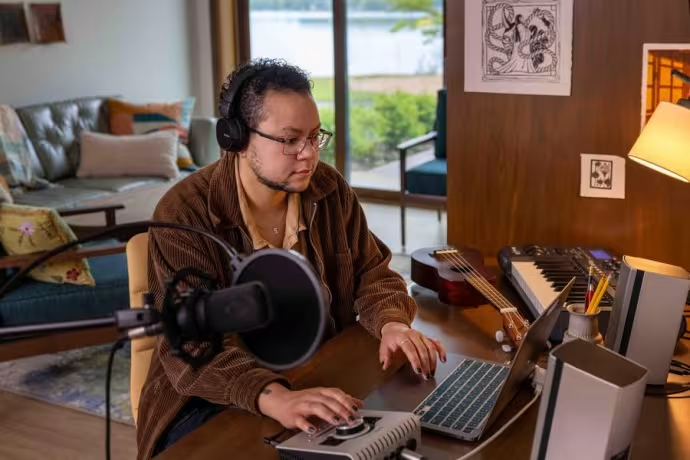
Online art education has evolved dramatically in recent years. What once consisted of pre-recorded tutorials has expanded into robust, instructor-led programs with real interaction and accountability.
Flexibility and Accessibility
One of the biggest draws of online learning is flexibility. Students can participate from anywhere and often work around school schedules, jobs, or family commitments. This flexibility is a major reason the online vs art school comparison has become more relevant.
Online courses also remove geographic barriers. A student living far from major arts institutions can still study with experienced instructors and access high-level training.
A Wide Range of Course Types
Online art education comes in many forms, including:
- Skill-specific workshops
- Semester- or year-long pre-college courses
- Portfolio preparation classes
- Private lessons and small-group instruction
Programs like Interlochen Online, for example, offer structured courses taught by experienced artists, making online learning more rigorous than many people expect.
Self-Directed Learning
Online courses require independence. Without a physical campus or daily schedule, students must manage their time and stay motivated. For some learners, this is empowering. For others, it can be challenging.
This difference plays a key role in the online courses vs art school conversation. Online learning rewards discipline and initiative, while art school provides built-in structure.
High School Credit, College Credit, and Certificates: What Some Online Courses Can Offer
One area where online learning has evolved significantly is in the ability to earn high school credit, college credit, or formal certificates through select programs. While not all online art courses offer academic recognition, some structured, institution-backed programs allow students to document their learning in meaningful, transferable ways.
Some online courses offer high school credit through certain classes. Generally, it’s a good idea for students to check with their high school before taking a course to ensure that the course earns them the desired credits. Some online programs provide an official transcript for their classes to make this process easier.
In certain cases, online courses may offer college credit through partnerships with accredited institutions. These credits can sometimes be applied toward future degree programs, depending on the receiving college’s policies. For motivated high school students, this can be a way to begin college-level coursework early while still focusing on artistic development.
Other online programs award certificates of completion or non-credit certificates that recognize sustained study in a specific discipline—such as creative writing, music theory, digital media, or visual arts. While certificates are not the same as college credit, they can still play a valuable role. For students building portfolios or applying to schools, certificates demonstrate commitment, follow-through, and exposure to advanced instruction.
It’s important to note that art schools and colleges vary widely in how they evaluate online coursework. Some institutions may accept college credit earned online; others may view certificates primarily as enrichment. For this reason, families should always confirm how a specific course or credential may be recognized before enrolling.
This distinction highlights another key difference in the online courses vs art school comparison. Traditional art schools typically award formal academic credit as part of a larger diploma or degree program, while online courses offer more modular credentials. For students who want flexibility without losing academic momentum, credit- or certificate-bearing online courses can be a strategic option—especially when paired with in-person training.
Art School vs Online Courses: Key Differences
To really understand art school vs online, it helps to compare them across several core areas.
Instruction Style
Art School:
Instruction is in-person and interactive. Faculty work closely with students in studios, rehearsal rooms, and workshops. Feedback is immediate and often ongoing throughout the day.
Online Courses:
Instruction typically combines pre-recorded lessons with live sessions, critiques, and written feedback. High-quality programs offer meaningful interaction, but the experience is less immediate than in-person learning.
This difference is often the first thing people notice when comparing online vs art school education.
Curriculum Focus
Art School:
Art schools tend to have structured curriculum, with classes building on each other sequentially towards a desired outcome or skill set. Students may enjoy some freedom to explore related subjects within or alongside the main curriculum.
Online Courses:
Online courses are an ideal way for students to create their own artistic paths, selecting areas of focus to align with their personal interests and goals.
Facilities and Materials
Art School:
Students have access to specialized spaces and equipment designed for their discipline. This allows for large-scale projects, collaborative work, and experimentation with professional tools.
Online Courses:
Students rely on their home setup, digital tools, and materials they have purchased. While instructors can demonstrate techniques, hands-on access to equipment is limited.
This is one of the clearest distinctions in online courses vs art school environments.
Community and Peer Learning
Art School:
Community is constant and immersive. Students spend long hours together, share feedback in person, and collaborate naturally.
Online Courses:
Community exists through discussion boards, virtual critiques, and group projects, but interaction is more scheduled and intentional.
Both models offer connection, but the depth and spontaneity differ.
Portfolio Development and Career Preparation
Art School:
Portfolio development is often embedded into the curriculum. Students receive guidance on auditions, applications, exhibitions, and next steps.
Online Courses:
Many online programs support portfolio work, but students may need to be more proactive about how and when they apply what they learn.
This distinction is especially important for students aiming for competitive programs or creative careers.
Time and Energy Commitment
Art School:
Art schools can be very rigorous and require lots of dedication to an artistic discipline. Set class schedules are common, and students may need to find ways to creatively fit homework and studio time into already-busy weeks.
Online Courses:
Online courses give students the flexibility to explore the arts around their personal schedules. Courses with synchronous components often provide recordings for students unable to make the sessions live. Students can learn in the time available to them—whether that’s after work, around a traditional high school or college schedule, or even while parenting.
Cost and Accessibility
Art School:
Tuition, housing, materials, and travel can make art school a significant financial commitment.
Online Courses:
Online learning is often more affordable and accessible, making it a practical option for exploration or supplemental training.
This cost difference is one reason many families weigh art school vs online options carefully.
Benefits of Online Courses
While art schools offer immersion, online courses provide distinct advantages of their own.
Flexibility for Busy Students
Online courses are ideal for students balancing academics, extracurriculars, or work. They allow students to continue developing artistically without uprooting their lives.
Targeted Skill Building
Online learning excels at focused instruction. A student might take an online course in songwriting, animation, or personal essay writing to strengthen a specific skill set.
A Smart Supplement to In-Person Training
Many students use online courses to complement traditional education. In this way, the online vs art school debate becomes less about choosing one and more about combining both effectively.
When Online Courses Can Match Art School Quality
So, are online courses as good as art school in any situations? In some cases, yes—especially when certain conditions are met.
High-quality online programs share several traits:
- Structured curricula with clear learning goals
- Regular instructor feedback
- Live interaction and critique
- Small class sizes or private instruction
When paired with in-person experiences—such as summer arts camps, workshops, or local studio classes—online courses can closely mirror the academic rigor of art school.
This blended approach is becoming increasingly common and effective.
FAQs
Are online courses as good as art school for serious students?
Online courses can be excellent for skill development and exploration, especially when instruction includes feedback and live interaction. Although they typically lack the full immersion of art school, they can provide community in other ways.
Can online courses replace a traditional art school education?
For most students pursuing professional artistic careers, online courses work best as preparation or supplementation rather than a complete replacement.
What are the biggest benefits of art school?
Immersion, daily mentorship, access to professional facilities, and a strong creative community.
How does networking compare in online vs art school settings?
Art schools naturally foster long-term peer networks. Online courses can also spark great connections, whether long-distance or locally; students often need to take extra steps to maintain them beyond the class duration.
Conclusion
So, are online courses as good as art school? The answer depends on what you’re looking for.
Online courses offer flexibility, accessibility, and targeted learning. Art schools provide immersion, structure, and deep mentorship. Each has clear strengths—and for many students, the most effective path combines both.
By understanding the differences between art school vs online, students and families can choose an approach that supports artistic growth, confidence, and long-term goals. For those seeking rigorous, artist-led online instruction designed to complement traditional training, exploring high-quality programs like Interlochen Online can be a powerful next step.
How does Interlochen Online work? Start a free course demo.
✔ | Expert Faculty Receive direct, personalized feedback from a professional artist. |
✔ | Real Growth Develop artistic skills that are important to you in 30 days. |
✔ | Collaborate Connect with peers and instructors on your projects—or just for fun. |