Elementary School Revolutionary
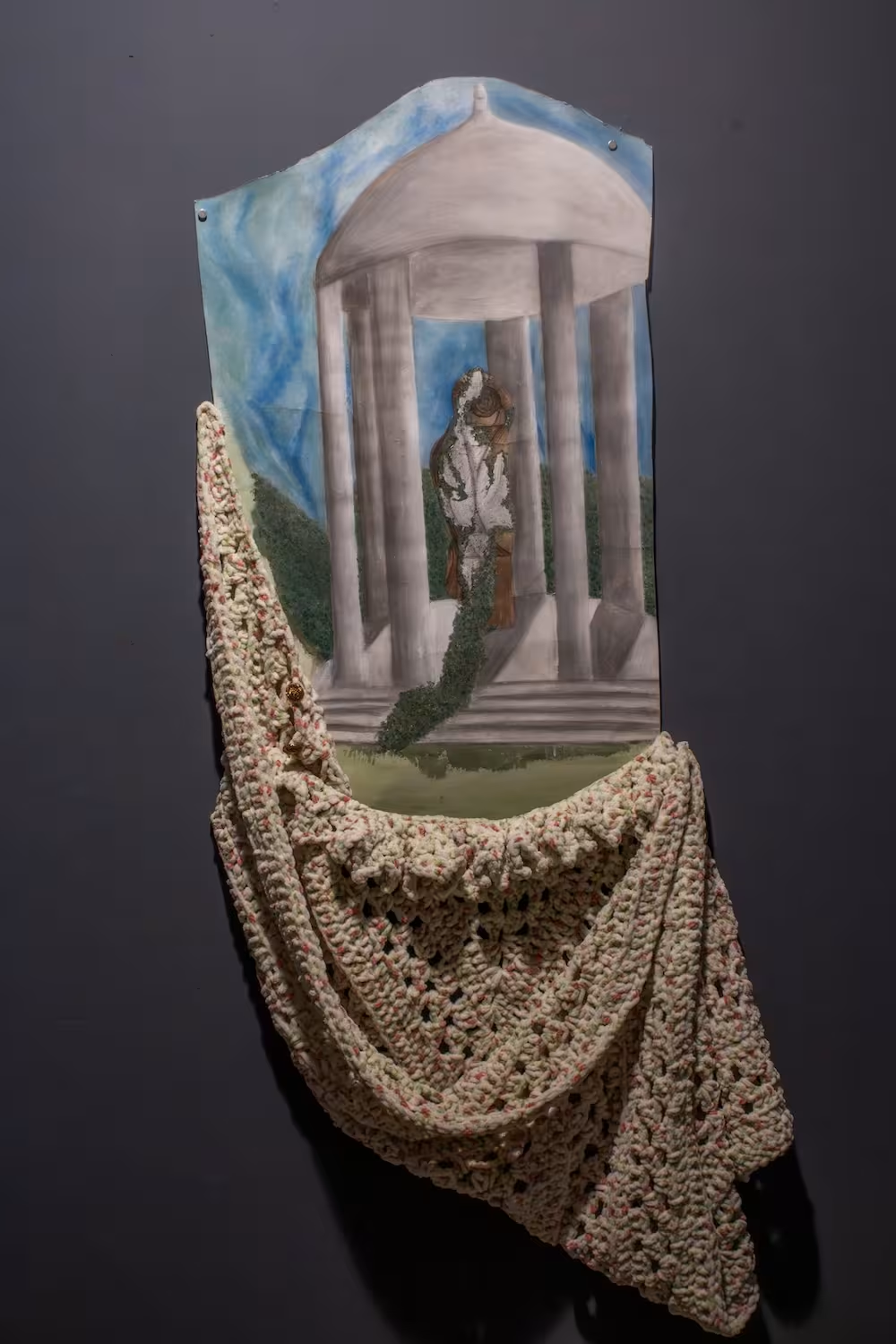
When I was a fifth grader, I had my first lesson on colonial Boston. Technically, it was about all of the thirteen colonies, but they anchored us in Boston in the 1770’s. They let us make our own characters, which was a genius move. I was obsessed with mine. Her name was Elizabeth. I put so much effort into an essay about colonial-era fashion because she was a seamstress. I’m not a visual artist, so the little paper cutout I made of her was extremely ugly, but I thought she was beautiful.
I didn’t know much about the American Revolutionary war at that point. I knew about the founding fathers, somewhat, and of course, I knew how it ended. We won. But my knowledge was a misshapen, unformed thing. I lived on the west coast, where there were no monuments or historical sights. The founding of America was a fairytale to me.
We didn’t start the lessons with the war. To be fair, no revolution ever starts as a war. We started a few years beforehand, with a research project to tell us what life was like during those times. Then we each presented our characters and had a few conversations to figure out our relationships to one another. I was the daughter of a government official. I was best friends with another seamstress who worked in the shop I inherited from my husband.
They gave us all businesses, so that when the prices started increasing, we really felt the effects. And while the gore and violence of a lot of those inciting incidents was turned down, because we were in fifth grade, we still heard about them. We made a timeline out of construction paper. We could see it all unfolding.
In the end, we had a choice to make. Would we make the decision to go to war with England? We were told what war would potentially risk. We sat with our table groups and began to talk it over.
Through bad improvisational skills and other kids' lack of interest, I began to notice something. None of us just wanted freedom. None of our reasons were purely because it was good, or that it was the right thing to do. No, we were all selfish in some capacity. I wanted a better life for myself and my family. A wealthier person wanted to be taxed less. A merchant was hoping to sell supplies to the troops. All of it was self-serving, but it was real, and true, and undeniable.
The choice for revolution wasn’t easy. I don’t think it’s ever been easy, in all of history. But even with all of our differences, all of our conflicting morals and goals, we came to the same conclusion. We would fight. We wrote our answer down on a neon green post it note, and we waited to see if anyone would join us. They would. We’d done it. We’d started something terrifying. From our classroom, we’d shaped the future together.