Writers Retreat


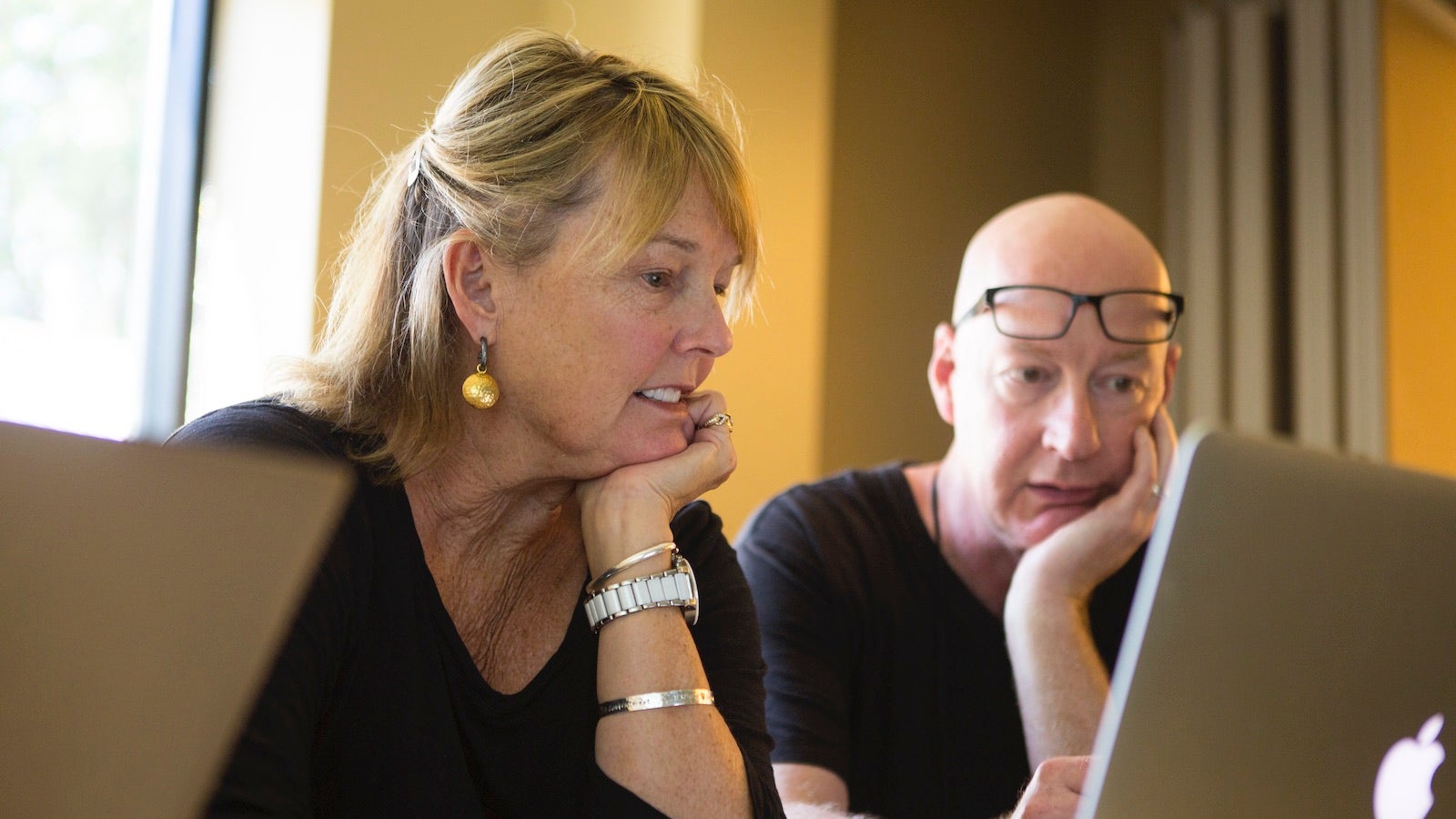
People looking at a computer

Develop your writing craft and forge lasting friendships in a welcoming and inspiring environment.

Nestled deep in the woods between two lakes, you’ll spend five idyllic days writing new material, attending presentations by award-winning faculty, enjoying evening readings, and making connections in the literary world.

The program features engaging class sessions, provocative faculty presentations, and faculty and participant readings—plus ample opportunities to explore Interlochen’s campus, mingle with other writers, and write independently amidst the serenity of nature. You can also participate in an optional public reading at Interlochen Public Library.

You'll select a concentration from several unique tracks described below, each grounded in different craft concepts with an emphasis on generating new work. 

You’ll emerge from the program with the inspiration and ideas to develop your next work—plus the encouragement and support of your new friends and mentors.

What You'll Need

Journals, notebooks, pens and/or pencils. An open mind and willingness to try new things, make fresh discoveries.  Bring a laptop if you like.  
 

Dates

May 31 - June 5, 2026

Early Registration Fee

$679
Tuition increases March 1

On-Campus Lodging

Participants can enjoy 10% off at the Stone Hotel and Cottages.

Choose one of the following concentrations upon registering.

Word-Soup Kitchen with Ignatius Valentine Aloysius

Come join me in prose and poetry’s kitchen as we explore ways to generate a colorful amalgam of personal creative writing examples in this workshop, which can help set your sights on publishing more confidently. Bring your writing tools, ingredients, and spices with you. Bring your fountain pens, pencils, and ink, and learn how to dish up a daily fare of good, rich writing that understands the flavor and lushness of lyricism. What is your favorite genre? How can it read better and move the reader more meaningfully across the page? With its focus on rhythm, sound, and concise meaning, poetry encourages writers to experiment with language, emotion, and imagery. On the other hand, prose’s more expansive and plot-driven narrative style, offers a broader canvas for storytelling and character development. By exploring both in this course, writers can learn to blend the precision of poetry’s form with the freedom of prose’s structure, creating new ways to express your thoughts and ideas. These explorations foster a deeper understanding of language’s power, pushing boundaries and allowing for your unique voice to emerge. All genres, all levels.

Sold Out: Where's the Action? with John Mauk

Stories come from conflict, a problem that must get addressed. That problem may be internal: an emotional need, moral quagmire, or intellectual puzzle. Or the problem may be external, one involving rivals, boundaries, or physical threats. Of course, the internal and external usually intermingle. They write together and create a complex knot that characters (and readers) must untangle. But no matter the nature of the problem, stories must get acted out, dramatized in the most physical and material ways possible. Readers want to live in the flesh of others, to sense the world, to experience the terrifying or beautiful friction of the moment. In other words, readers yearn for action—not necessarily car chases or barroom brawls, but people acting and reacting to the material conditions around them. In our workshops, meant for story, memoir, and creative nonfiction, we will help writers to determine the primary conflict of their stories—either real or imagined. From there, we will chart out key scenes, moments that best dramatize that conflict. Whether totally new to fiction or committed to an ongoing project, participants will write, share, and receive our support each day.

Crafting Joy: Writing Literary Bliss with Anne-Marie Oomen

Our goal? To explore the craft of joy on the page. While writing about the hard stuff continues to be on many writers’ minds, this year, let’s couple those skills with something different. Let’s examine what it means to write joy. In so many workshops, we are taught to start with trouble, that conflict and tension will draw us in, that the hard stuff sells. All true. But as antidote to these darker themes, how do we craft work that textures those qualities with the opposite? How do we write in a way that doesn’t gloss over the hard stuff, but offers language laced with those rare qualities of joy—fulfilled jubilance and elation. We’ll look at models from C. S. Lewis to Ross Gay, and we will practice inventive forms from ekphrasis to hermit crabs. We will plumb what it means to write from and into a position of delight. For all genres, all levels.

Blurred Lines: Where Life and Art Collide with Christine Maul Rice

“There is no longer any such thing as fiction or nonfiction; there’s only narrative.” — E.L. Doctorow

Has anyone ever told you that your life (or parts of it) could be a book? If so, which genre will contain it? Fiction or nonfiction? You won’t know until you start writing. A writer’s primary medium is the imagination—but memory is a slippery beast. In this generative workshop, you will develop hard skills to translate lived experiences into compelling narratives. We will study writers of traditional creative nonfiction (Jesmyn Ward) who toe the line between fiction and creative nonfiction (Pam Houston), writers who unabashedly fictionalize elements of their life (James Baldwin), and writers whose fictional scenes are so close to reality we see right through the author’s thin veil (Tim O’Brien). You’;ll take risks, experiment, consider how to cross- pollinate genres and/or implement hybrid forms. You’lll identify your most compelling material, play with point of view, structure and form, and push new work or work in progress in useful directions, with the goal of discovery and pages to keep working on. Open to all levels.

Writing the Unsaid: Finding Power in Silence and Subtext with Cyn Vargas

In this generative workshop, we’ll explore how absence can be as powerful as presence on the page. What happens when we write into silence, suggestion, or the words we don’t say out loud? Through daily prompts, we’ll experiment with ways to use gaps, shadows, and negative space to create tension and resonance. Together we’ll generate new work across genres—fiction, nonfiction, and poetry—focusing less on what’s stated and more on what’s implied. Writers will leave with a portfolio of fresh starts and a deeper understanding of how to use the unsaid to shape powerful, layered stories. For all genres, all levels.

Make'Em Laugh with Mary Kay Zuravleff

Humor is an invaluable tool in storytelling. We’ll take a look at absurdity, wit, satire, gallows humor, and slapstick in this workshop, as you practice different ways to include humor in your fiction or memoir. Come prepared to share moments you laughed out loud and moments when you laughed to keep from crying. Returnees welcome (pick up where you left off!) and new voices celebrated.

Please bring materials to take notes and work on writing assignments. In workshops, you will usually use journals and pens, but a laptop can be handy during the week. A USB Flash Drive (memory stick) is also recommended. Printers and Wi-Fi will be available.

K-12 educators in Michigan can earn 22 SCECH clock hours by attending the Writers Retreat.

The Anne-Marie Oomen and Katey Schultz ICCA Creative Writing Scholarship is awarded annually to (one or more) eligible participants in the Interlochen College of Creative Arts (ICCA) Writers Retreat. The scholarship funds awarded will cover the applicant’s registration fee for the retreat. Award is competitive and merit-based.

VIEW THE ELIGIBILITY REQUIREMENTS AND APPLICATION

Meet the Faculty

Patricia Ann McNair

Patricia Ann McNair

Artistic Director of Writers Retreat, Writer In Residence, Interlochen College of Creative Arts

Katey Schultz

Katey Schultz

Writer-in-Residence, Writers Retreat, Interlochen College of Creative Arts

Fleda Brown

Fleda Brown

Writer-in-Residence, Writers Retreat, Interlochen College of Creative Arts

Desiree Cooper

Desiree Cooper

Guest Artist, Creative Writing, Interlochen College of Creative Arts

Ignatius Valentine Aloysius

Ignatius Valentine Aloysius

Instructor of Creative Writing, Interlochen College of Creative Arts

John Mauk

John Mauk

Instructor of Creative Writing, Interlochen College of Creative Arts

Anne-Marie Oomen

Anne-Marie Oomen

Instructor of Creative Writing, Writers Retreat, Interlochen College of Creative Arts

Christine Maul Rice

Christine Maul Rice

Instructor of Creative Writing, Interlochen College of Creative Arts

Cyn Vargas

Cyn Vargas

Instructor of Creative Writing, Interlochen College of Creative Arts

Mary Kay Zuravleff

Mary Kay Zuravleff

Instructor of Creative Writing, Interlochen College of Creative Arts

Questions? Contact us.

Email: college@interlochen.org 

Phone: 231.276.7340 

Discover more programs for adult artists

Sign up to receive new program announcements and registration information.
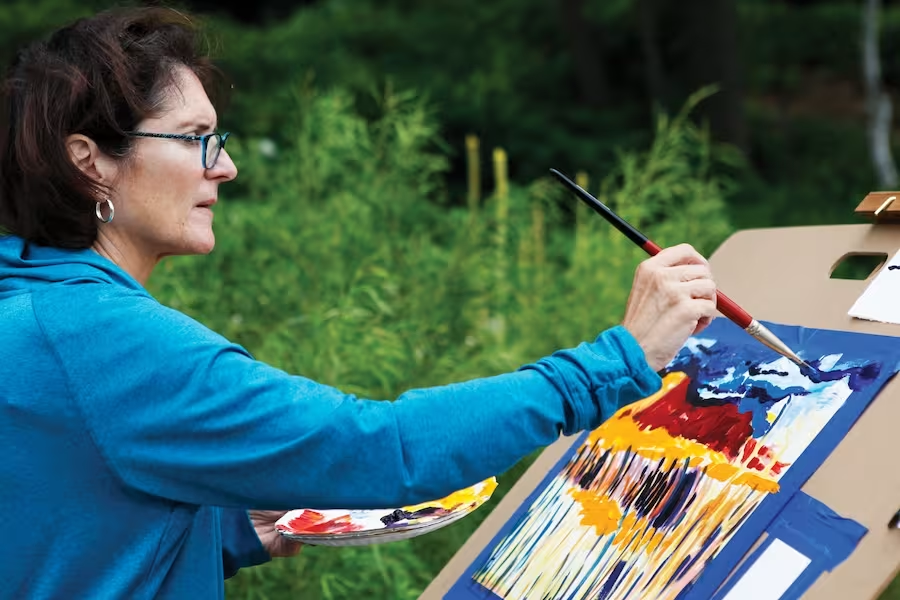
Interlochen College of Creative Arts student paints en plein air