What are online music certificates and how do they work?
Find out what an online music certificate is, the difference between self-paced and cohort-based options, and what you can expect from an online learning experience.
Updated: October 10, 2026
For a long time, growing as a musician meant getting to the right classroom on campus at the right time. Today, online music certificate programs bring expert teaching and credible credentials to where you already live and learn. Students looking to receive their music certificate online will study music with skilled artists, build a portfolio they’re proud of, and earn a credential that shows real progress—without pressing pause on school, work, or family life.
This guide explains what an online music certificate is and how they help both younger students and adults achieve their music goals. You’ll see what the learning experience feels like, how to choose a program, and where to go next if you’re ready to get started.
What is an online music certificate?
An online music certificate is a structured series of courses that focuses on a specific area—like music theory, songwriting, production, or performance skills. You follow a clear plan, complete projects that show what you can do, and receive hands-on feedback from instructors.
Some providers design their certificate programs as a set of short courses you can complete in sequence. For example, Interlochen Online describes its certificate programs as three courses that fit together to build deeper knowledge.
At the end of each program, you’ll earn a credential that you can add to your résumé, LinkedIn, or application materials. In addition to this, some programs like Interlochen Online also offer college or high school credit for completing an online music certificate, helping students get ahead on their degrees while exploring music education.
How do online music programs work?
No two online music programs are identical, and that’s a good thing—you can pick the format that matches your goals and schedule.
Fully online vs. hybrid: Fully online programs deliver everything digitally: lessons, assignments, feedback, and final projects. Hybrid options add optional in-person workshops, summer days on campus, or live virtual events.
Self-paced vs. cohort-based: Some certificates allow you to move through lessons as quickly (or as steadily) as you wish. Others group students together in a cohort so you progress in sync, share drafts, and stay accountable.
Admissions expectations: Many online programs—Interlochen included—let you enroll in courses and certificate programs with no application or portfolio required, which lowers the barrier to getting started.
What you’ll study (and why it matters)
Most music certification programs online cover one or more of these four pillars:
- Core Musicianship: This is the “how music works” foundation—intervals, harmony, rhythm, ear training, and the language of music. Building fluency here pays off forever: your reading improves, you learn new pieces faster, and you communicate better with collaborators.
- Applied Study or Performance: If performance is included, you’ll practice with a plan, submit recordings, and get targeted feedback. The goal is steady technical improvement and musical storytelling, not just playing the notes.
- Composition and Songwriting: You’ll learn to shape ideas into full pieces, revise with purpose, and develop personal style. Guided prompts and critiques help you move from “interesting idea” to “finished work.”
- Music Technology and Production: You’ll use a digital audio workstation to record, edit, and mix. Even if you don’t plan to become a producer or engineer, knowing how to capture clean sound and build a demo is a superpower—whether you’re auditioning, composing, or teaching.
At the end, you don’t just “know” more; you have proof. You’ll have a certificate of completion, but also a portfolio—recordings, scores, cue sheets, or tracks—that shows your growth in a clear, shareable way.
Some programs, including Interlochen Online, also allow students to earn college or high school credit as part of their programs, meaning students can make progress on a degree while they learn their craft.
How much of a time commitment are online music programs?
For most learners, the winning advantage of online study is simple: it fits into their lives. Many certificate programs are designed so you can commit a handful of hours each week without over-stretching the rest of your life.
Interlochen’s model of three four-week courses allows you to focus deeply for a short burst, catch your breath, and then build on what you’ve learned.
If you’re in middle or high school, you can plan around rehearsals and homework. If you’re in college, you can stack it with your schedule or use it to explore a field you can’t fit into your major. If you’re working or raising a family, you can carve out time before the day starts, after dinner, or on weekends. The structure keeps you moving; the flexibility keeps you sane.
How much do online music courses cost?
Tuition varies by provider, length, and the amount of feedback or one-to-one instruction included. When you compare options, look at what’s included: instructor contact, project reviews, college or high school credits received, and any career or portfolio support.
You may also need to invest in a few essentials:
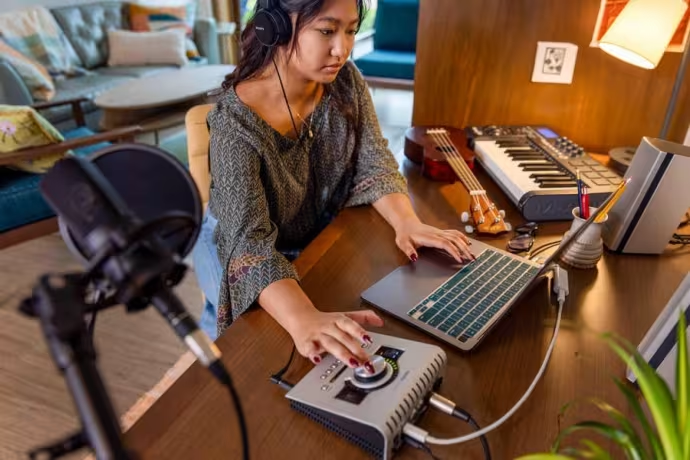
- Headphones for clear, accurate sound.
- A microphone if you’ll record voice or acoustic instruments.
- Notation software or a DAW if you’re composing or producing.
Not everything has to be top-of-the-line to start—many students begin with dependable mid-range gear and upgrade as their needs grow. Some programs also offer payment plans, and certain courses may list free or low-cost software alternatives. If a certificate includes college credit or a portfolio piece you’ll actually use, that value also belongs in your cost-benefit math.
What the learning experience feels like
The big question most people ask is: “Will taking an online course feel personal?” With a well-built program, the answer is yes.
Modern music certification programs online blend on-demand teaching with direct, personalized feedback from professional artists. You won’t only watch videos—you’ll submit work, hear what’s strong and what needs attention, and apply that guidance to your next draft or take.
You can also connect with peers: many programs include discussion threads, critique circles, or informal virtual meet-ups that keep you motivated and supported. Interlochen’s online courses emphasize exactly this: expert faculty who give direct feedback, real growth across a few months of focused work, and collaboration with classmates and instructors.
This flow—learn, try, get feedback, try again—mirrors how great studio classes operate on campus. The difference is that you choose when and where to do the work. If you want more interaction, look for programs that include live office hours or optional workshops. If you want more independence, choose a track with strong asynchronous support and clear rubrics.
Who do certificate programs help?
- Middle school students who are just discovering their passion for music. A certificate can give them structure, confidence, and recognition at a key age, encouraging them to audition for school ensembles, prepare early for arts-focused high schools, or simply take their practice more seriously.
- High school students who want to stretch beyond school ensembles, deepen theory knowledge before AP exams or auditions, and get ahead on college credit.
- College students who are looking to fill gaps, explore areas outside their major (such as production or film scoring), or add portfolio pieces that can help with internships or graduate applications.
- Adult learners who want to return to music after years away, build confidence to teach, or finally complete creative projects like recording an EP. For working musicians, certificates can add skills that lead to more gigs, collaborations, or teaching opportunities.
What do you get out of a certificate program?
What happens when you finish an online music certificate program? First, you’ll have a credential that demonstrates expertise. Second, you’ll have evidence: recordings, scores, and projects that tell your musical story. Third, you’ll have momentum—the feeling that you can set a goal, build a plan, and follow through.
If you’re a teen, this might mean walking into an audition with stronger rhythm reading and a better ear. If you’re an adult, it might mean finally launching a lesson studio, joining a community ensemble, or landing a small score-to-picture project.
If you plan to continue, your certificate can become a stepping stone to deeper studies, private lessons, or even a degree—especially if your program comes with college credit.
How to choose the right program
There are hundreds of music certificate programs online, each with different specializations and offerings. To help find the right program for you, consider these five steps:
- Define your outcome: Do you want to perform more confidently, compose original work, or learn to produce clean demos? Are you looking to pursue a degree and want to earn credit to get ahead? Start with the result and pick the path that delivers it.
- Check the teaching model: Is there regular, personalized feedback? Are there clear examples of student work and transparent expectations? Will I be able to take multiple courses under the same faculty member?
- Confirm the pace and calendar: Make sure session dates match your life. Interlochen’s site marks session starts clearly, which makes planning easier.
- Look at the portfolio promise: Ask yourself, “What will I make here—and will I be proud to share it?”
- Review admissions requirements: If you’re just starting out, the “no application or portfolio required” signal on a course listing is a green light to jump in.
The bottom line
Online music certificate programs work because they combine structure with flexibility. You’re guided by artists who know the craft and the classroom. You move at a pace that respects the rest of your life. You make work you can share. And you finish with a credential that proves what you’ve learned.
Whether you’re a middle schooler just starting out, a teen aiming at auditions, or an adult dreaming of finally recording your own music, certificates create a structured way to turn that dream into something concrete.
FAQs
Is a music certificate worth it?
Yes—taking a music certificate program online gives students a structured environment to learn new skills, practice their instrument or discipline of choice, and make progress towards their music goals. Many programs also offer college or high school credit at an affordable rate to help students get ahead on their degrees.
What can you do with a certificate in music?
Many musicians will list their music certificate as a credential for their résumé, university applications, or professional performance auditions. Musicians can also use the recordings, scores, or projects produced during their certificate program as part of their creative portfolio. Finally, some music certificates can be transferred as college or high school credit, allowing musicians to apply their courses towards a degree.
How do music certifications work?
Music certifications are typically a series of several music courses that culminate in a credential. At Interlochen Online, music certificate programs consist of three courses tailored to a specific instrument or subject. Upon passing all three courses, students leave with a certificate and are eligible to receive college or high school credit.
What are the benefits of online music education?
Online music education offers a flexible, convenient way for musicians to practice their craft, learn new practical skills, and receive tailored feedback from instructors and peers. Classes are taken when your schedule allows, and offer structured motivation to reach your music goals. Some online certificate programs like Interlochen Online also include the ability to earn college or high school credit, helping you make progress towards a degree.
Which music certificate is best?
There’s no “one-size-fits-all” music certificate program available online. The best online music certificate programs are ones that fit your schedule, include high-quality music lessons from experienced instructors, and are tailored to your specific instrument goals.
How does Interlochen Online work? Start a free course demo.
✔ | Expert Faculty Receive direct, personalized feedback from a professional artist. |
✔ | Real Growth Develop artistic skills that are important to you in 30 days. |
✔ | Collaborate Connect with peers and instructors on your projects—or just for fun. |