
College credit is now available with certificate programs! Enroll now before prices increase Oct. 26.
How to Develop Your Tone on Flute
Daily exercises for flutists of all levels.
By Shelia Del Bosque, Interlochen Online Instructor and Course Author

One of the first things that captures our attention when we listen to a performer is their tone: the quality of the sound their instrument produces. As I often like to say, "Your tone is your business card."
There are many kinds of tones: rich, clear, focused, fuzzy, airy. The list is nearly endless.
Here are the elements involved in producing different qualities:
- Embouchure: The shape of your facial muscles, lips, aperture, tongue, and teeth.
- Velocity: The speed of your airflow, being able to transition from slower to faster airflow velocities.
- Instrument: The physical material of your flute and the subtle variations of its build.
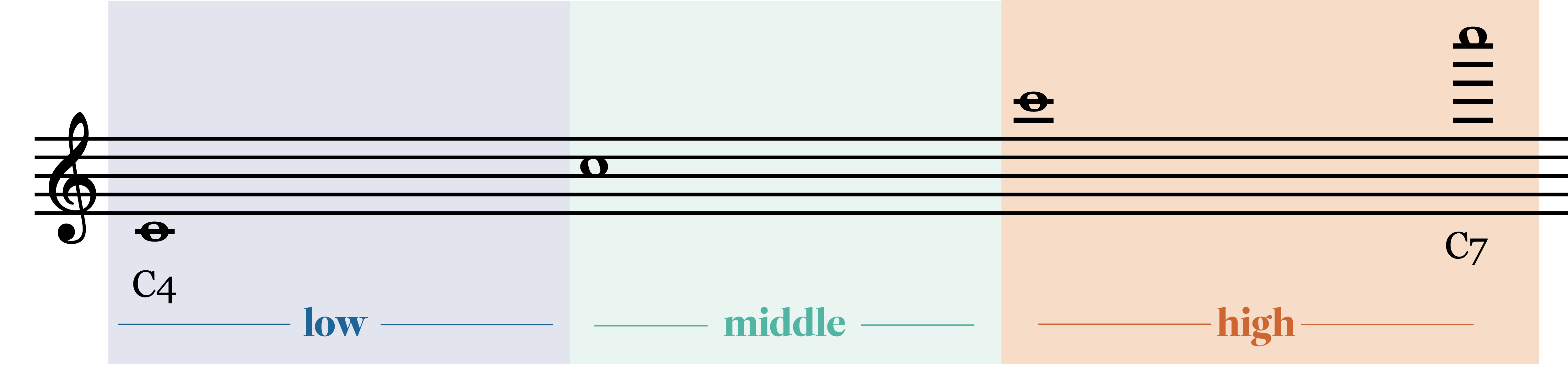
The flute's range spans from C4 (or B3 if equipped with a B foot) to F7 and even F#7, though the upper limit commonly reaches C7.
The Low Register
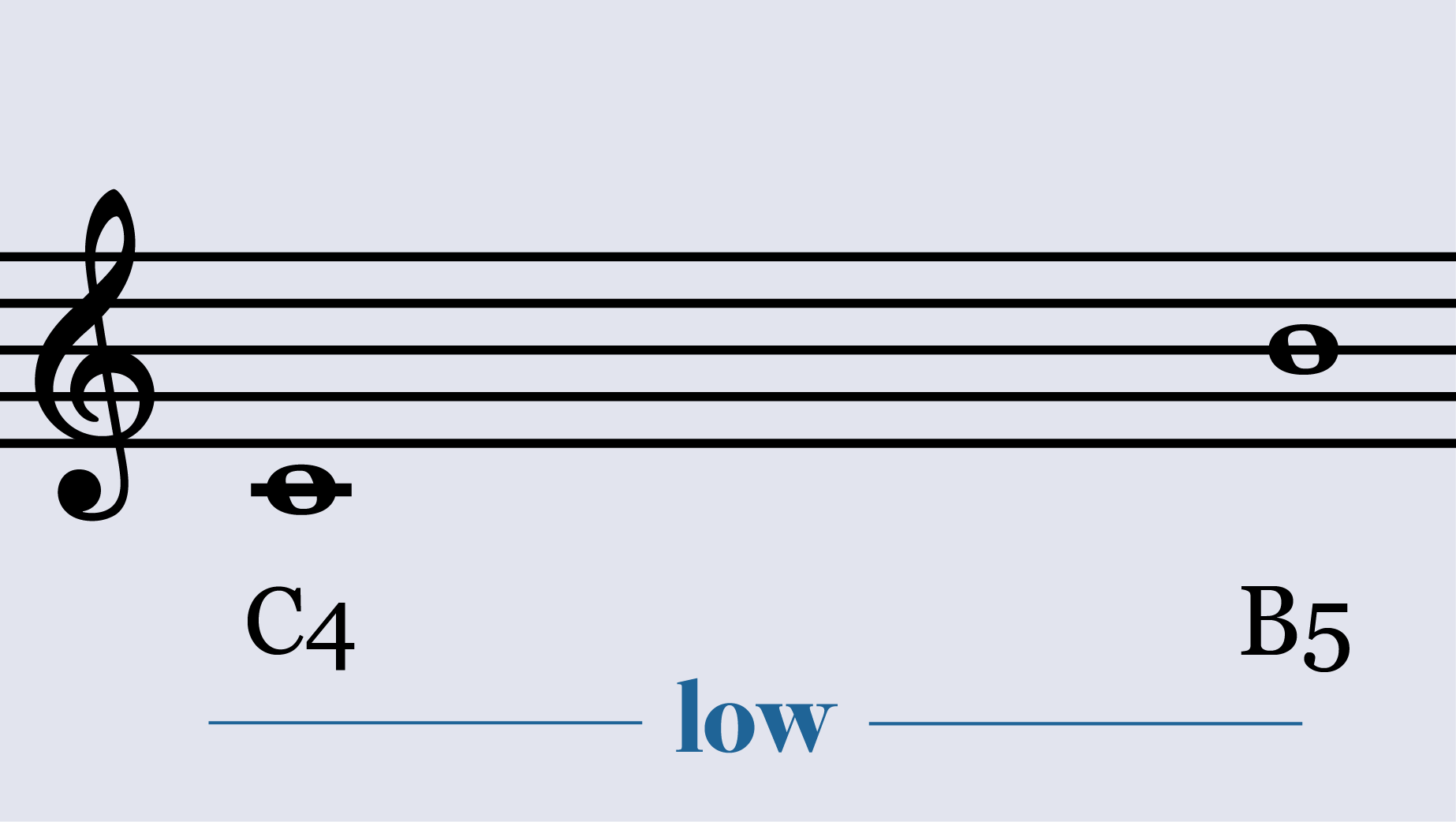
The low register is the foundation for producing a good sound on the flute. One common challenge when playing low notes is the tendency to use excessive air. Experiment with dynamics and discover the limits of your sound in this range.
Tips for the low register:
- Direct your airflow downward toward the embouchure hole.
- Maintain a relatively larger aperture size compared to higher registers.
- Relax and envision the vowel sound “AWWW” while ensuring a nice, open throat. The flute tube is important for resonance, but so are the cavities in your head. By opening your throat, you increase resonance space—essentially turning your head into a second resonance box.
The Middle Register
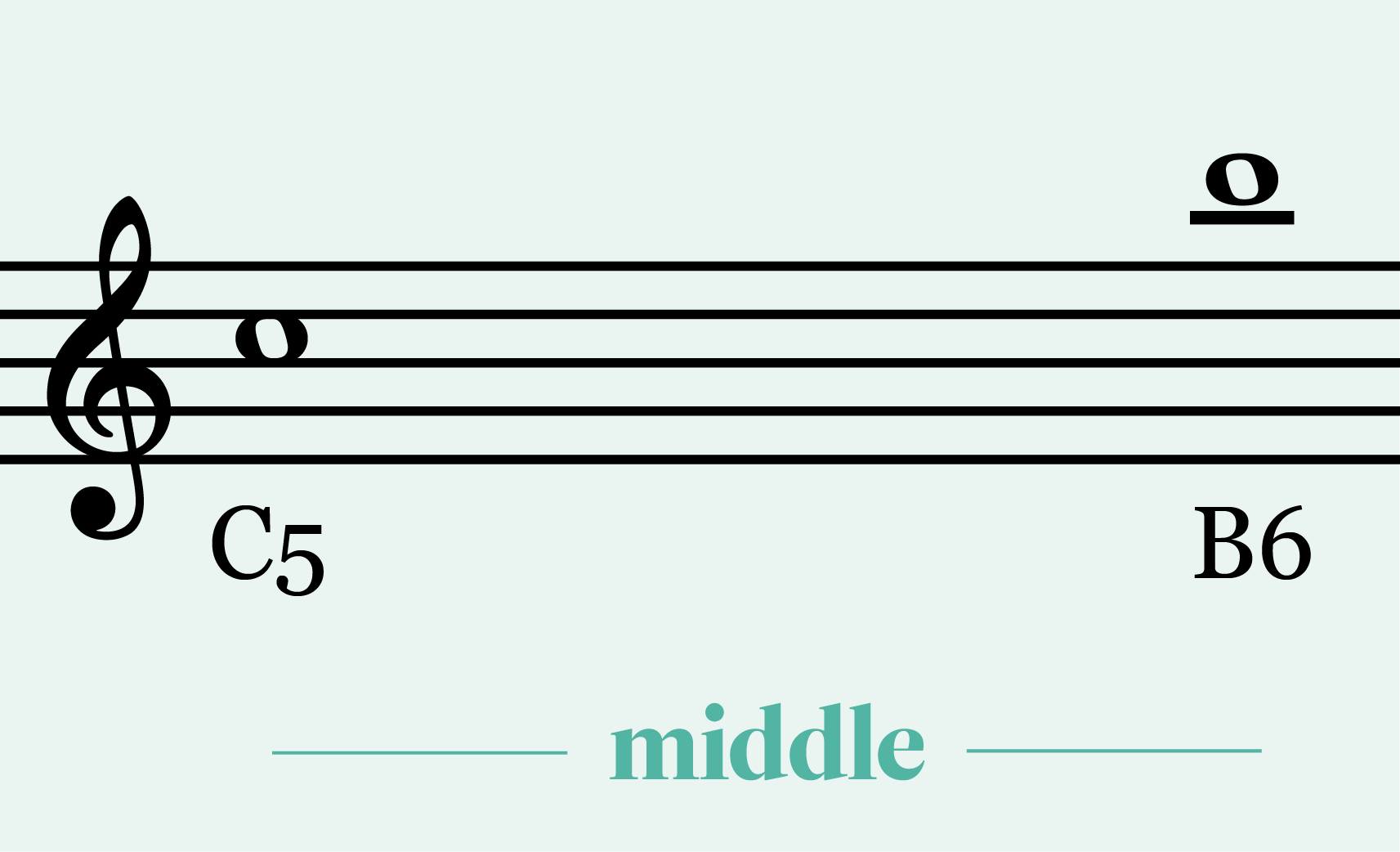
The middle register of the flute goes from C5 to C6. This register produces brighter notes compared to the lower register, allowing for greater dynamics and contrast in your playing. Some of the fingerings for middle register notes are the same as those in the low register, so the octave changes should primarily come from controlling your airflow and adjusting your embouchure shape.
Tips for the middle register:
- Move the corners of your lips slightly forward. This adjustment should be subtle, and your outer lips should not cover the embouchure hole.
- Be cautious not to put too much force or too little into these adjustments, as it could cause the note to leap up or down an octave.
The High Register
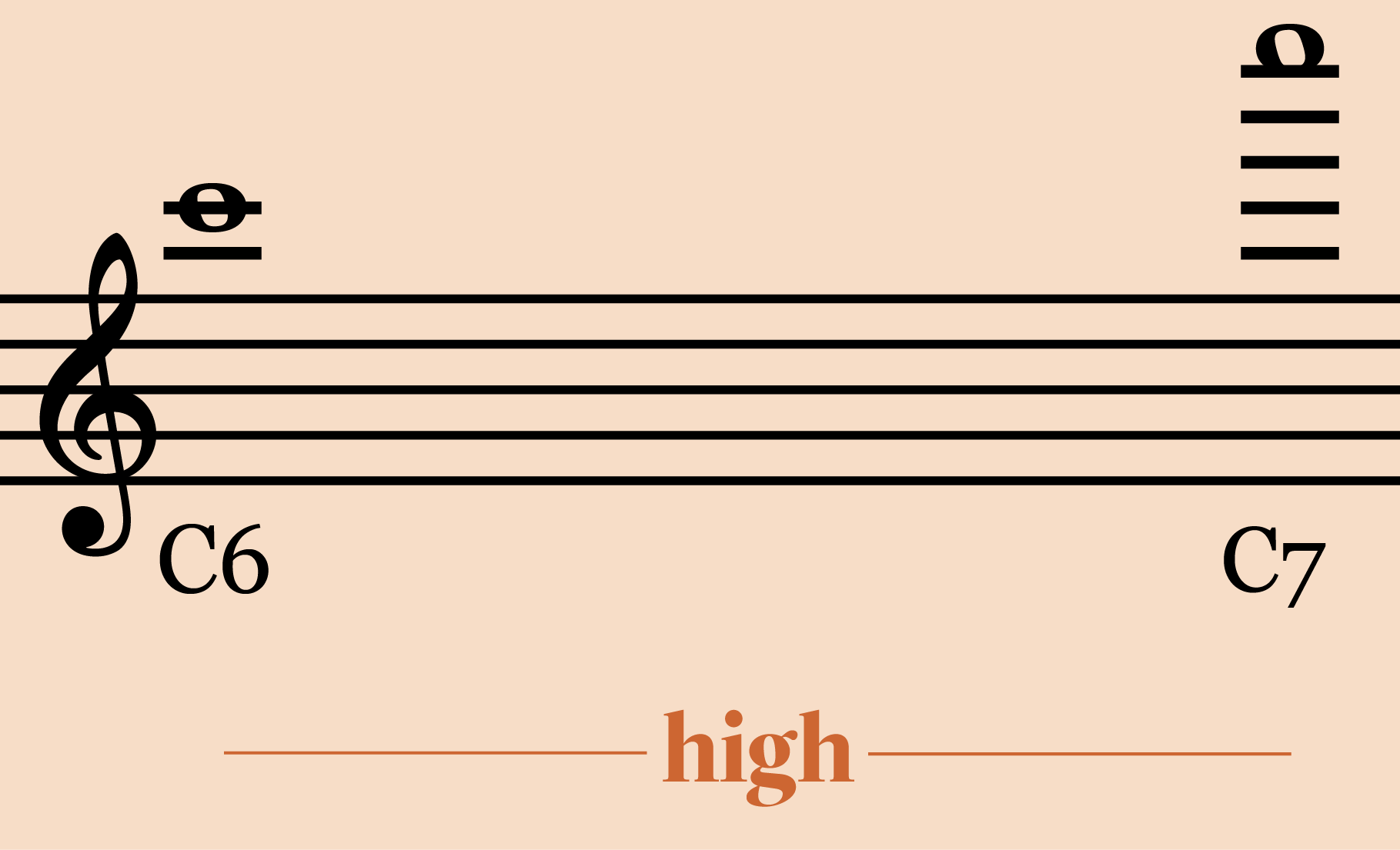
The high register starts in C6, and it’s the most challenging. Patience is key—and perhaps a tolerant neighbor!
Tips for the high register:
- Move the corners of the lips forward even further than the middle register.
- Use a faster velocity in your airflow and a smaller aperture in your lips.
- Breathe well with good posture and imagine yourself projecting to the last seat of your favorite concert hall.
- Ensure you're using the correct fingerings, and for open-hole systems, make sure you are covering the holes. You can always use plugs while working on your embouchure. That way you can focus on one thing at a time.
- Be aware of how much of the embouchure hole you are covering. You don’t want to roll the flute too much inward or forward. Try to find that sweet spot where your notes sound clear.
- Keep the head joint position steady, ideally with no more than one-third of the hole covered.
- You want to have your fingers close enough to your keys so you can feel them, not necessarily press them.
- Don’t forget to regularly clean your flute. Check for any leaky pads that might affect your note transitions.
Exercises to Build Tone Across the Entire Flute Range
Practice each melody below while paying close attention to the nuances of your sound. Focus on achieving a consistent and resonant tone, paying careful attention to each note's clarity, pitch accuracy, and expressive phrasing. Listen attentively to identify areas for improvement and areas where your tone quality shines.
While playing, maintain an awareness of your posture, ensuring a comfortable and aligned position that supports optimal breath control and tonal projection. You may want to record yourself or use a mirror to visually observe your playing technique and body posture.
Repeat the exercise, incorporating your self-feedback and adjustments to further refine your tone and musical expression.
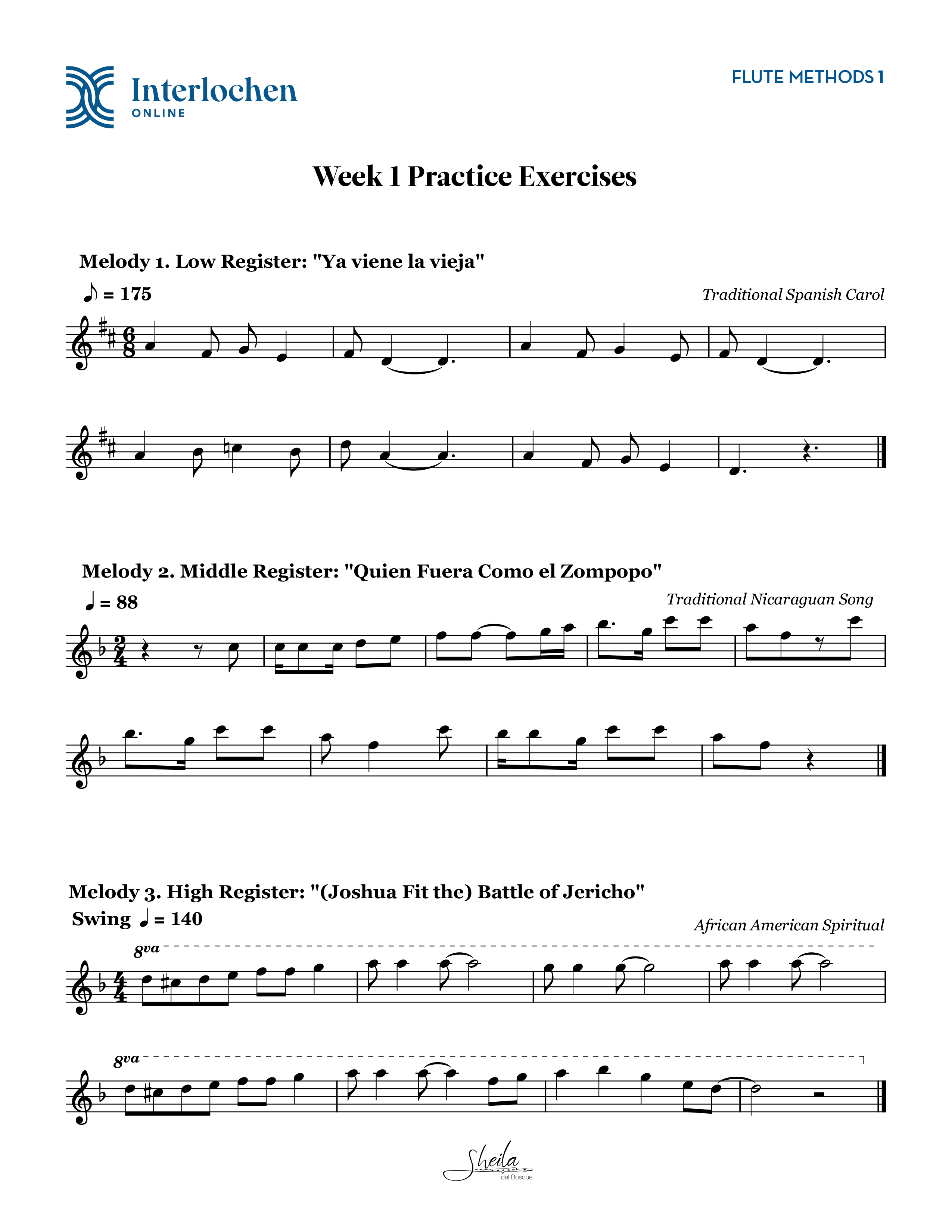
Remember, these exercises are not magical solutions, but with time and dedicated practice, progress is inevitable. As the great Marcel Moyse emphasized in his inspiring book, De la Sonorité:
“It’s all a question of time, patience, and intelligent work.”
Want to continue learning with Interlochen Online?
Find your perfect course now—the next session starts Oct. 26.


Recommended Flute Courses
Each course flute offers four weeks of instruction and personalized feedback from a professional flutist.
Flute Methods 1
Strengthen essential flute skills and expression.
Flute Methods 2
Refine your tone, breath control, and harmonics.
Flute Methods 3
Stretch your dexterity, sight-reading, and improvisational skills.
Take all three courses and earn a certificate from a world-renowned institution.
The FLUTE METHODs certificate program is perfect for...
✔ Adults looking to boost their creative résumé and LinkedIn profile
✔ Teens who want to earn high school credit for their passion
What are students saying?
Students who enrolled in flute courses rated their experience 4.8 out of 5.
How does it work? Sample a course for free.
✔ | Expert Faculty Receive direct, personalized feedback from a professional artist. |
✔ | Real Growth Develop artistic skills that are important to you in 30 days. |
✔ | Collaborate Connect with peers and instructors on your projects—or just for fun. |