
Oral History Interview with Chris González
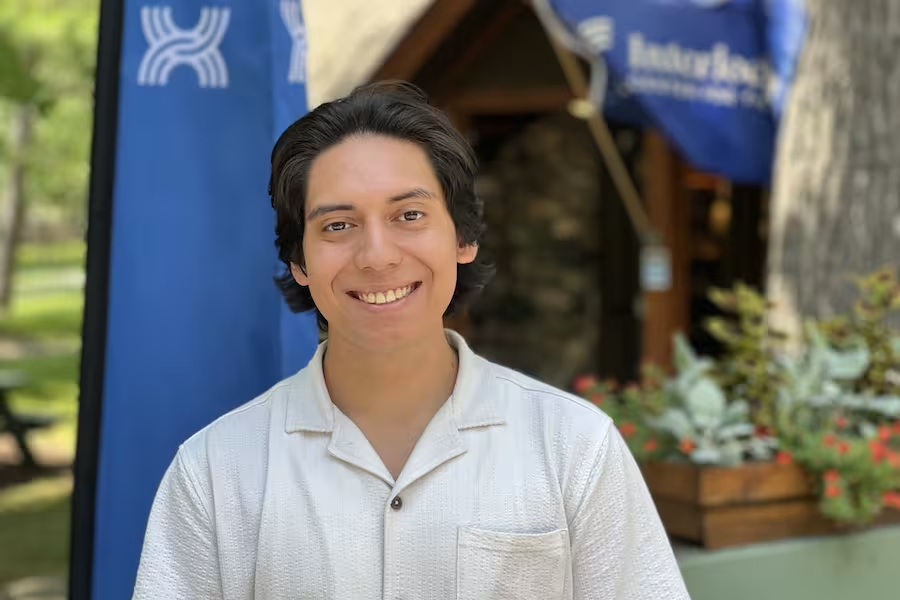
Interlochen Affiliation: IAC 18-19 | IAA 18-20 | IAC St 21-24
Interview Date: July 3, 2024
Chris González studied trombone for two summers and continued his studies at Interlochen Arts Academy, graduating in 2020. He is a freelance musician and music production assistant in the Chicago area.
This oral history is provided free by the Archives of the Interlochen Center for the Arts (ARTICA). It has been accepted for inclusion in Interlochen’s audio archive by an authorized administrator of Interlochen Center for the Arts. For more information, please contact archives@interlochen.org.
00:00:00 BRADFORD BAILEY
Today is July 3, 2024. This is an oral history interview with
00:00:05 CHRIS GONZÁLEZ
Chris González ,
00:00:06 BRADFORD BAILEY
conducted by Brad Bailey on the campus of the Interlochen Center for the Arts. All right. Where are you from? And tell me about your childhood.
00:00:12 CHRIS GONZÁLEZ
So, I was born in Miami, Florida. I am the oldest sibling of five. Both of my parents came here from Nicaragua sometime in the early '90s. And, yeah, I was pretty much born and raised in Miami. Spent most of my life up there, until I ended up coming to school here.
00:00:32 BRADFORD BAILEY
Great. And where'd you go to college?
00:00:34 CHRIS GONZÁLEZ
I went to DePaul University.
00:00:35 BRADFORD BAILEY
Okay, and where is that? What town is that in?
00:00:36 CHRIS GONZÁLEZ
That's in Chicago, Illinois.
00:00:38 BRADFORD BAILEY
Okay, great. So tell me about a bit about your childhood? Was music involved in your childhood?
00:00:43 CHRIS GONZÁLEZ
Yeah. So my grandfather, when he came to the United States, which was in the 70s, he started his own business at a flea market, and he would sell a bunch of, you know, imported like vinyls and clothing and stuff like that. And my family, we, we weren't very financially stable, and so I wasn't, didn't have access to things like toys and things like that growing up. And so a lot of the time for like Christmas or my birthday, I'd get some sort of present that my grandpa would have at his shop at the flea market. My first ever exposure to music was a vinyl record of Tchaikovsky's Fifth Symphony.
00:01:23 BRADFORD BAILEY
What year was this?
00:01:24 CHRIS GONZÁLEZ
This was in 2005 I believe is when this happened.
00:01:30 BRADFORD BAILEY
Okay.
00:01:31 CHRIS GONZÁLEZ
Yeah. So I was like, three years old at the time, and you know, you're at that point in your life, you're, like, starting to become aware of what's going on around you. And you know, I remember listening to the record, and I would just play it over and over again, and I know they would eventually frustrate my parents a lot, because they're like, how are you not getting tired of this vinyl? But since then, and I also found out at one point that my dad was also a trumpet player in high school, and so that kind of -
00:01:56 BRADFORD BAILEY
In Miami?
00:01:57 CHRIS GONZÁLEZ
Yes, in Miami, yeah, because he moved here right as he was starting middle school. I ended up going to the same middle school he went to, and so he was like, you know, you should join the band program and stuff like that. So I'm sorry if I'm getting a little,
00:02:09 BRADFORD BAILEY
You're fine.
00:02:10 CHRIS GONZÁLEZ
Yeah. So that was my first exposure to music, specifically classical music. And then once I got into middle school, I remember my dad was telling me, like, you know, the school that we went to was very, very poorly funded. It wasn't a very safe neighborhood. And
00:02:27 BRADFORD BAILEY
What area of Miami was it in?
00:02:28 CHRIS GONZÁLEZ
This was Little Havana. And so, the school that we, that I went to, there were things like gangs and drugs. And I, you know, I, there were people whom I had gone to elementary school with and graduated before I did to middle school, and by the time that I got to middle school, and they were still there, they were either, you know, had gone arrested or in trouble with the cops, you know, any sort of thing like that. I mean, I've, I know people who have unfortunately not been able to live past, you know, middle school, just because they've gotten involved into very difficult situations. And so for me, I kind of went ahead and gone into music as kind of like a safe haven to get out of that, especially since that was, I mean, the thing in my in my school at least, was that, you know, you either were heavily into drugs or you were in a gang of some sort, and it just was not anything I really found interesting and did not want to be a part of. So I joined the band program. And what's funny about this is that I originally had done band to get out of karate because my dad was like, Let's do karate. I think it'll be good for you, and it was very beneficial, but I didn't really enjoy it as much. And so I joined band, and I started originally as a percussionist, and then there was an incident where one of the other percussionists bumped into me while we were doing our warm up, and my band director was like, Oh, you dropped the, you know, you the snare drums on the ground. Now it's broken. And, you know, I tried telling him, oh, you know, like he bumped into me, this sort of thing, and he didn't believe me. And so I got switched off of percussion to a bassoon, and I was the only bassoon player, and it lasted one day. And because I found out that I would have to make my own reads, that's a skill that I unfortunately, not, unfortunately, fortunately, I did not possess, because it is just a very tedious thing to do and stuff. And so that same day, I ended up going to the school main office, and I was like, I think I'm gonna drop this class. I think I'm gonna find something else to do. So they were like, oh, we'll give you, you know, the rest of the week, and then by Monday, you'll be able to be in another class. But thankfully, the band director offered me another opportunity to pick another instrument. And so I picked the euphonium, another instrument that no one else wanted to play. I mean, I very much enjoyed it because it was, you know, it's not, it wasn't like the trumpet or the clarinet, and everyone wanted to play it. And so I very much enjoyed that. And then I joined a youth orchestra that now has a really great partnership with Interlochen called the Miami music project. And when I auditioned they said I had one of the best auditions, which made me really happy. And, you know, I when I found out that there was an audition happening to join, I was very much like, oh, I need to do really great on this. I practiced. I would take my euphonium at home and stuff, and, you know, stay up late trying to practice and, you know, master the music and stuff. And then when I got in, they were like, That's great. You're in. But euphonium was not an orchestral instrument, so you're gonna have to learn either the trombone or the tuba. So I ended up going with trombone, because it was the same mouthpiece. It wasn't gonna be that much of a difference, except for the slide. And I remember when they handed me the trombone, I did not grab the slide. And so immediately the slide just fell off of the trombone, and I kind of panicked. They're like, it's okay. It's okay. So, but yeah. So I ended up being a part of this youth orchestra for about eight, no, a little bit less than that, a lot less than that, five, six years, I'm gonna say, Yeah, through them, I've been able to do a lot of summer festivals. I ended up going to a summer festival in LA that was partnered with the Los Angeles Philharmonic. I was able to go to Allentown, Pennsylvania for an El Sistema USA festival. And I mean, this program just granted me with a lot of opportunities and stuff. And this kind of segues into me going into how I got to Interlochen.
00:06:14 BRADFORD BAILEY
No, I love it. Go ahead.
00:06:15 CHRIS GONZÁLEZ
So if I remember correctly, it was December of 2017 and we had just done our winter concert, in which they announced that they were starting a partnership with Interlochen and bring us, bring us up to Interlochen for the summer. I did not know anything about Interlochen. I was completely unaware.
00:06:34 BRADFORD BAILEY
Had you left Florida before?
00:06:36 CHRIS GONZÁLEZ
Yes,
00:06:37 BRADFORD BAILEY
okay,
00:06:37 CHRIS GONZÁLEZ
Yeah, I had left Florida before. I spent a portion of my childhood around in elementary school in Nicaragua,
00:06:44 BRADFORD BAILEY
got it,
00:06:44 CHRIS GONZÁLEZ
but I had never gone to any other state aside from, you know, doing these little
00:06:50 BRADFORD BAILEY
Yeah that was my question,
00:06:51 CHRIS GONZÁLEZ
yeah, yeah. I didn't know that the partnership was happening. And around January or February, I think there were a couple representatives from Interlochen at the time that came down, and they did auditions. And I remember, I walked into what I thought was going to be a symphony orchestra rehearsal, and everyone was warming up by themselves. I see violins in the corner, you know, practicing their Paganini, and, you know, woodwinds practicing Nielsen or Mozart. And I was just like, I have no idea what's going on right now. I need someone to explain. I had totally forgotten to mention this earlier. The how this ended up being was I signed my name on the sheet because they had all these sheets for like events that you could sign up for to go and see, you know, like maybe Cleveland Orchestra was visiting, and you could go sign up and watch a concert and stuff like that. And so I kind of just didn't know what the sheet was, it was at the end of a rehearsal, so I was like, I want to go home. I'm tired. And I just saw the sheet, and so I just signed my name, and then they told me, Well, you signed your name on this sheet saying that you wanted to audition. And I was like, I do not remember that happening, because, well, I was like, well, when's the audition? They were like, in about half an hour. And so I was like, Okay, I have nothing prepared. I'm gonna have to find something to repair in less than an hour, I was able to find a quick little Etude that I just played on trombone, and I ended up getting in, which completely just left me speechless, because I was like, I just pulled this out of nowhere. I was not prepared for this, and I ended up getting in. And so I told my parents about it. My parents were very ecstatic. They were happy for me. And then I ended up coming here. I spent all six weeks up here, six years ago. I mean this, this past weekend, I was playing with the Interlochen Philharmonic, just because they unfortunately had one of their students drop at the at the last second. The program that they did contained a piece that I did with that exact same group six years ago, first concert ever here. And so it was very nostalgic for me. But anyways, I'm getting a little side track. I just remember when we landed here, I was just enamored with how beautiful it was, you know, and we hadn't even left the airport yet, and by the time that we got on the bus on the way there, I mean, I was just looking at all the trees and the sun, and I was like, it this is totally different from where I've been before, because I've only been to big cities. And so I just remember the entire bus ride, I had my phone out, and I was just taking pictures and stuff. And then I did the audition, and I ended up in the Interlochen Philharmonic for the first four weeks. And I mean, a lot of the other people around me were like, Oh, I ended up in the Interlochen Philharmonic, it's not WYSO, but I, I really didn't care. I was just like, I'm happy to be here. This is amazing. And I made a lot of really great friendships being here and stuff. And then at the end of the summer, I ended up going up to WYSO. And then eventually I got an invitation to come here.
00:06:55 BRADFORD BAILEY
WYSO?
00:08:30 CHRIS GONZÁLEZ
Yeah, the World Youth Symphony,
00:09:42 BRADFORD BAILEY
Got it, got it. For the record, yeah.
00:09:48 CHRIS GONZÁLEZ
Sorry. I ended up playing with them for the last two weeks, and then they offered me a scholarship to come here.
00:09:56 BRADFORD BAILEY
For the year?
00:09:56 CHRIS GONZÁLEZ
For the year.
00:09:57 BRADFORD BAILEY
Oh, wow.
00:09:58 CHRIS GONZÁLEZ
But unfortunately, it wasn't enough for me to be able to say yes.
00:10:01 BRADFORD BAILEY
Okay.
00:10:02 CHRIS GONZÁLEZ
And so somewhere, somehow my youth orchestra ended up finding out about this. I because I didn't, I didn't audition for, I didn't do it like an actual formal audition for the Academy. I just happened to express my interest. I was like, you know, the notion of being able to go to an arts boarding school,
00:10:21 BRADFORD BAILEY
And how old were you again?
00:10:22 CHRIS GONZÁLEZ
I was still in Miami at the time. I was going to a school called
00:10:24 BRADFORD BAILEY
How old were you though?
00:10:25 CHRIS GONZÁLEZ
I was, what, 16.
00:10:27 BRADFORD BAILEY
Okay.
00:10:27 CHRIS GONZÁLEZ
Yeah, 16 or no, it was turning 16.
00:10:30 BRADFORD BAILEY
Got it.
00:10:30 CHRIS GONZÁLEZ
Yeah, because I turned 16 the day after. I just finished camp here, yeah. And so I ended up getting this scholarship. It wasn't enough money for me to go. And then my youth orchestra and Interlochen decided to send me and two of my other colleagues in the youth orchestra up to Interlochen for school. And I it was a very tough decision to make, just because I was very
00:10:53 BRADFORD BAILEY
They found the money.
00:10:54 CHRIS GONZÁLEZ
They found the money, and they were able to get me a full scholarship. And so now is just, you know, now is a matter of me making that decision. Do I want to leave the school that I'm at and leave my friends behind? I wouldn't say I like wasn't learning anything at the school that I was at the time, but I kind of felt like I wasn't being challenged enough. And so it was a very tough decision to make. And one of my closest friends, Edric Vivoni, who's actually here, also working this summer, he called me because he had gotten here a week before I had gotten the announcement that I had received a full scholarship to come. And he just pestered me. He's like, Dude, you got to come. Dude, you got to come. We had so much fun over the summer, and you know, he ended up being what, you know, what made me go ahead and make the decision to come here. And then I went to, I went to Academy here for two years, my junior and senior year, very much loved it. And in between those two years, I also went to camp here again. So yeah, and then, unfortunately, COVID happened. Graduated 2020 I wasn't able to have an official graduation, but, you know, there wasn't really much I could do at the time, you know, we were all in lockdown and stuff, and so a part of me wasn't able to get closure because of that. And so I told myself, you know, at some point I'm gonna have to get closure. And I figured that I would just come here and work. J Berry, who's over at the info booth now, she at the time when I was here, for school, she used to be the director or assistant director of instrument services, and have always had an interest with instruments and stuff like that. And she ended up deciding to hire me to be her assistant during the summers. And so I worked for her for three years, and then now I have kind of switched jobs to try something a little different. And now I'm a stage Services Manager. So yeah, now I get to go ahead and run a crew of people and have them go ahead and set up chairs and stands and, you know, kind of do a lot of the behind the scenes, or what happens here year round and stuff like that, so, or mainly camp right now, but yeah. So that's kind of been my journey with Interlochen. I don't know if, you know, there any other questions you want to ask?
00:13:04 BRADFORD BAILEY
No, it was great. Like we, I have plenty of questions to ask, but, um, but no, that was great. So talk to me about that nostalgic experience you had, or, I guess, a full circle moment.
00:13:14 CHRIS GONZÁLEZ
Yeah, so, you know, I had never really had a chance in my youth orchestra to play a full symphony, a full orchestral symphony. And so I remember I was just like beaming with joy, as some of my friends would say, when I when I found out that we were doing this Tchaikovsky symphony, and it's one that I've also come to grow and love, just like Tchaikovsky's Fifth Symphony. And, you know, I just remember, I have a video on my phone somewhere of our tuba player was recording us in rehearsal, practicing a spot, and you could just tell how happy I was in that moment, and when I got asked to play with IP this week, this past weekend, with the same repertoire, I couldn't really process that, because I was just like, you know, I was here six years ago as a camper, and I'm being able to do this again, play this piece again as a now graduated college student. And now I, you know, I mean, I just, it just felt great knowing that I've made it this far, being able to have the opportunity to go ahead and perform one of the first pieces I ever played here again, was just really heartwarming to me, and it just made me feel like I've done it. You know, I've worked my way from, you know, I wouldn't say absolutely nothing, but you know, knowing very little, because at the time, too, I also was not able to fluently speak English. I should have mentioned this earlier. I did not learn English until I went to school here. And I had a very hard time navigating my first summer here, just because, I mean, I could speak enough English to get by, but not enough to, like, have a full conversation with people and stuff.
00:15:07 BRADFORD BAILEY
That must have been very challenging that first,
00:15:08 CHRIS GONZÁLEZ
Yeah, it was very challenging. I mean, I had to have my phone with me all the time, and I'd have to, like, put my phone in front of people's faces and have it translate what I was saying. I mean, just looking back at it, I'm like, wow, you know, like, if you had told me, like, six years ago that I would have be able to be here now, doing the exact same piece, working here and, you know, and being this cog in this very big machine, you know, because, I mean, my job is pretty much making sure that every faculty, staff and student has everything they need. I mean, if you had told me that six years ago, I would have said, You're You're crazy, you know? Yeah, I mean, just, it was just very nostalgic, just sitting there and being surrounded by these kids who are now being able to have the same opportunity I did. So, yeah.
00:15:55 BRADFORD BAILEY
So tell me about your favorite place on campus. What is your favorite place to go on campus, and why?
00:16:00 CHRIS GONZÁLEZ
My favorite place? If I had to pick a favorite place...Well, it's, it's, unfortunately not here anymore, but it's where Dow house is now. When I was here for School and Camp, it used to be an old radio station, and it was, you know, very run down and stuff, but I remember I would always sit on top of the radio station, and I had a clear view of, this is Green Lake on this side, if I'm not mistaken. And I mean, I would just sit there. And if I was just bored during the school day, or I had nothing to do during the camp, I would go and sit and read a book, or, you know, start writing music. And it just, it's very sad that that building's not there anymore, but the fact that now there's, I don't mean, I don't remember very because I didn't spend that much time past the radio, radio station that used to be there, but now there's a basketball court there. And, I mean, the dorm is very beautiful, and being able to get a nice view of the lake and stuff, but that definitely has to be my favorite spot. It's just right, right around Dow house.
00:17:04 BRADFORD BAILEY
And who's the most memorable person that you felt you've learned from or had collaborated with or friends with here at Interlochen?
00:17:12 CHRIS GONZÁLEZ
Well, I don't have one person in particular. I have three people, if that's really that's all right. So one of them is Dr. Matthew Schlomer, who just recently, uh, left to go pursue a job at a university. You very much, helped me kind of focus on music more in a spiritual sense, and it's kind of helped grow my passion with music, and kind of not see it as just like, Okay, I want to make music just for the sole purpose of making music, but more of having a message behind the music that I go ahead and play or write. And so I got to thank him for that. Second person would be Dr. Leslie B. Dunner, who is the orchestra Academy conductor here, and he has been such an amazing resource. He has wrote all of my college recommendations. He has, even to this day, he has aided me with currently trying to go ahead and take live orchestra auditions and stuff, and he's been, you know, an amazing, he's an amazing educator, pedagogue, but he's also been a very amazing friend. And I see him as a father figure, if I'm going to be quite honest, he has been very helpful during my time here, and even past my my time here for School and Camp. And then the last person would have to be J Berry. I mean, J Berry got me my job here for my first summer after COVID and all that. I mean, she's made it possible for me to go ahead and kind of grow as a person. She's helped me with any sort of situation I've had, personal or professional, and I can't thank her enough for everything she's done. A nd she's still helping me to this day, I mean, she's making it possible for me to pay for my little sister to come here for camp, and she'll be coming in about four weeks.
00:18:55 BRADFORD BAILEY
Oh, wow, congratulations.
00:18:56 CHRIS GONZÁLEZ
Thank you. You know, and those these three people have been so influential on what they've done. And, I mean, there's still plenty more people that have been so helpful in my path here, of my journey, I should say, you know, I mean, the list is very long, but you know, these three people have definitely been, have left such a big impact on me, personally and professionally. So, yeah.
00:19:16 BRADFORD BAILEY
So what's your favorite Interlochen memory?
00:19:19 CHRIS GONZÁLEZ
My favorite Interlochen memory has to be the Interlochen one tour that we did to Miami right before COVID happened. I had just finished doing all of my college auditions the month of February. I took the whole month of February off from school. I got all my assignments done early and stuff like that. That way I can go ahead and do my college auditions without the stress of, Oh, my God, did I turn in this homework assignment, you know, anything like that. And I was very nervous about going into college, you know, doing these college auditions, because I had never done an audition in that sort of style, you know, like a very formal audition. And so I was very much, what's the word that I want to use, very, very focused and centered on making sure that I did a good job with this. And then coming back after I did my auditions, we did this tour, and it was right before spring break. And so it was really great being able to have that opportunity to go back to my hometown, even though I had been there before, like two weeks before this tour, was just where I'd happened to do an audition at the University of Miami. We went on this tour, and my friends were there, and so I had my friends from here at Interlochen meet my friends from back in my old school. So it was, you know, it's kind of what I guess, what the kids are saying, crossover episodes sort of thing. It was, it was great for my family to also see what I have done, because my family didn't really get to see much of what I did during my time at Interlochen, and the fact that now we were going to them, and not only them, but also my youth orchestra, and the kids in my youth orchestra that I, you know, looked up to me and all of my other friends that were also from my youth orchestra. Having that experience was amazing. I mean, I think about that tour pretty often just because of how amazing it was, you know. And we were running on this adrenaline rush, you know, because we were we're getting to the end of the year, everything was going gray and stuff. And it just, I was just so happy. And seeing my family was great. I hadn't seen my family since spring break of the previous year. And I mean, it was just amazing, and just being able to collaborate with some of the, not only just the musicians in the orchestra, but also interdisciplinary and film and new media and dance and visual arts. I mean, it was just the word that I want to use is ineffable. There just aren't enough words to describe how great of an experience it was. So yeah, definitely my favorite memory has to be going on that trip.
00:21:50 BRADFORD BAILEY
Wow, I can imagine. Another full circle moment. Yeah. And so how do these friendships impact your life?
00:21:58 CHRIS GONZÁLEZ
These friendships have impacted my life. So once again, I didn't. I was not able to speak English fluently when I first got here, and when I got to Academy, I had a lot of friends who were really trying to aid me to get to that point where I could speak the language fluently, and I would practice with them. And you know, I mean, every person I've met here has been so helpful. Back then, and this is just part of Latin American culture, we don't typically ask for help. It's kind of, not frowned upon, but they just encourage, you know, you should figure it out on your own. And being able to kind of get out of that habit of, you know, rejecting any sort of help was, of course, very helpful, and it, you know, it allowed me to open up to other people, and it gave me the opportunity to finally realize who I am as a person and tell myself that it's okay to be vulnerable. And so, you know, I have friends that I talk to every single day, and you know, I thank them for all the help that they have given me here and and that, and that's allowed me to go ahead and, you know, allow me to make more friends, whether it was at college or it was at work or even here, it's been so, so impactful these friendships that I've made. And you know, every time that I now, I'm in the point in my life where I freelance in Chicago, and also I do visit a couple other places to do gigs and stuff, and the opportunity to go and catch up with these people after seeing them, or, you know, after seeing them maybe a year ago, or before COVID happened, you know, having that opportunity to go ahead and catch up with them and thank them for everything they've done for me. And you know, of course, you know I, you know they also thank me for whatever I've done for them. It's just really impactful, and it warms my heart personally. And you know, I wish that every single person, every single student or camper or whomever it may be, that they come here, that they have that exact same opportunity to have friendships that last a very long time. And not only, you know, you benefit from it, but they benefit from it. And you know, it's once again, I've been using this word, but it's very heartwarming. It's very much something that I personally value, is having real connections with people that are just meaningful and deep. So, yeah.
00:24:23 BRADFORD BAILEY
So, what do you think your future looks like with regard to music?
00:24:27 CHRIS GONZÁLEZ
My future looks like it'll be a lot of freelancing. I originally, when I, when I first came here, my goal originally was to get a job in a major symphony orchestra, but being able to kind of do other things here. I mean, like I when I was here, I'd never played in a jazz band before, and now I have this, this love for jazz, I mean, and being able to speak the language while playing it, and be able to not necessarily do what's written on a piece of paper by, you know, some white German or Russian or whatever, you know, being able to do music by a female composer or a Black composer or a Latin American composer. I mean, that's kind of one of the things that I am trying to do more of in music, especially with freelancing, is not to just be tied down to this one idea of, I need to get a job in a symphony orchestra. You know, there's several other things like, I would love to play in film scores, you know, for movies and stuff like that. Currently in Chicago, I play in a couple mariachi bands, playing several jazz bands, a couple community orchestras here and there. But I think my long term goal really is to kind of be an advocate for that, for diversity in music, because I personally don't have that many people to look up to in terms of Latin American musicians. I mean, yeah, they're Latin American composers, but I know myself that there aren't any Latin American trombone players and, you know, major symphony orchestras or even jazz bands, you know, and all that sort of thing. So really is kind of not only to be a role model for kids that come here and then, you know, have someone to look up to, but also for any sort of minority group to, you know, know that it's not hard, you know. And yeah, I mean it saying that, you know, it's, it is hard, and there are a lot of obstacles, but I'm the type of person where, if there's an obstacle, I like to see it more as a challenge. And, you know, tell myself, you know, I can beat this, you know. And I want to be able to go ahead and say, Oh, I played in a major symphony orchestra, oh, I played on this film score, oh, I've played, toured with this jazz band. Yeah, long term, I would love to just go ahead and be a, I guess, a leader in that aspect, you know, and say, hey, you know, I'm from Latin America. I did not have the best childhood. I didn't have the same opportunity to some of the other people that I've met in my life, but I've made it, you know? I that's really what I want to do is show that I can do it. You know, if you're really dedicated to something, and you have that drive in you, that burning passion, you know, you you can definitely do it. And that's, that's really what I want to do, is show that I have done it that way when the day comes at if I have kids, you know, they can see that they can do it too, and that, you know, it's not hard. It is hard, but, you know, it's only hard if you think of it in that mindset.
00:27:26 BRADFORD BAILEY
Wonderful. And so last few questions, how would you describe Interlochen for someone who hasn't experienced it?
00:27:33 CHRIS GONZÁLEZ
Interlochen is a, very much a safe space. It is a safe haven, regardless of where you come from, who you are, what you believe in, whatever the case may be, this is a place for you to go ahead and grow as a person. And I mean, obviously, you know, we're Interlochen is more centered around the arts, but just because it's centered around the arts doesn't mean that you can't have the opportunity to, you know, become a better person and and contribute to society and stuff like that. And you know, it is a training ground for any person who is involved in the arts to not only master what it is that they want to do, but also being able to connect with other people who might be in the same have the same lifestyle as you or you know, my different upbringings, you know this is a place for you to be who you are and be able to do the thing that you love without having anyone judge you for it, and that that's really what I think of Interlochen, it's a it's a safe space for you to go ahead and be yourself and express yourself however you want to go ahead and express yourself.
00:28:42 BRADFORD BAILEY
Wonderful. I love that. And so what is your hope for Interlochen's future?
00:28:48 CHRIS GONZÁLEZ
Well, my hope is we get to the point where it isn't limited only to, you know, people who can afford it. And you know, obviously, like times today, you know, the times that we live in, there's a lot going on around the world and stuff, and it's very much, very sad to see that. And so I know recently, we've had a student from the Middle East who was able to come here and, you know, escape all the things that are going on there. And I think that, I mean, that's amazing to hear that, you know. And so I think providing underprivileged, you know, very underrepresented communities, to have that opportunity to come here would be great. And I mean, so far, we're having a great start. And, you know, I think that the more we keep this up, the better. And after COVID, the arts have kind of been going through this, like shifting, I guess, of trying to figure out how we want to go ahead and move forward. And Interlochen has been, I mean, doing a great job with, I mean, they just premiered Edmonia, which was that three year project opera that they've been working on, which, I mean, hearing about that from where I was was amazing. I was like, you know, that's great that we're doing, that they're doing this opera. Just not saying that they're doing this, but not doing it for the purpose of just catching up with what everyone else is doing nowadays, in terms of, you know, being woke and all that, but doing it because, well, we're striving to be better each day and making sure that everyone here can have a good time and enjoy themselves. And you know, it comes back to the whole thing of it being a safe space. I want Interlochen to continue to be a safe space and give more people an opportunity to come here, that way they can experience that.
00:30:32 BRADFORD BAILEY
And so what advice would you give to future Interlochen students coming in?
00:30:36 CHRIS GONZÁLEZ
My advice for any future Interlochen student is, do not take this place for granted. I will say this place has changed my life, but there have been times where I did take this place for granted. You know, I I can't even begin to tell you how often I think about this place in even, even when I'm here, I like I think I look back to how much fun I had and how I grew as a person, and the amount of opportunities I got to go ahead and do what I love the most. And so, you know, don't spend, and I'm also not saying, you know, spend your time, your whole time here, doing what you love, you know. Don't go ahead and spend all your time practicing in a practice room. Don't go ahead and learn your musical theater stuff like all the time you know, or spend all your time in the visual arts building. I mean, this is a place for you to go ahead and master your craft, but also take in just how many people have been here and have been able to, you know you're following in the footsteps of several other great people that have been before you, and so, I mean, really, yeah, just don't take this place for granted. Because, you know, I mean, I unfortunately had had to leave early because of COVID, and because, I mean, I continue to come back. And I joke about this with my friends. Sometimes, is that sometimes I do get a little frustrated with things here, just because work related. And I'll say, I hate to use this word, that I hate this place, but I can't hate this place, because this place has just changed my life. You know, I can't imagine where I would be without this place. You know, this is my home away from home. I could not see myself going any other place during the summers. I mean, I love it so much here. And every time I've been able to come back to work, you know, I just think of how wonderful it's been here, and how happy I feel and seeing other people be happy, you know. And also, part of the reason why I keep coming back is that I want to give the campers and the students the same opportunities that I got. And so it, you know, it's me giving back, because people gave to me, you know, I was able to come here because of my youth orchestra. I was able to end up going to a really good college, because I got a lot of really good training here and stuff, you know. And so, you know, now I want to give back. And I think that, you know, every person that comes here should not take this for granted, because I know of something I know that I have several times in the past, and, you know, I, if I could go back in time, I would change that, because I just love it here. I love it way too much. And some people outside of Interlochen might see that as like, you know, Oh, You're crazy. You're obsessed with that place. But, I mean, they just haven't had the chance to really see how how much beauty there is here.
00:33:22 BRADFORD BAILEY
And so last question, why does art matter in our world today?
00:33:28 CHRIS GONZÁLEZ
Art matters in our world today, to me, because people nowadays are very much concerned about what's going on in like social media and what's going on in the world around us. And not to say, oh, we should totally not focus on these things, because these are, you know, a lot of things that are going on in our world right now are very important issues that need to be talked about and dealt with. But with the arts, I mean, you know, you can change a person's life through it. I've been to several concerts where I am constantly reminded that it has changed my life. You know, I have tried, with several my friends back home to get them to kind of dip their toes into the arts and, you know, help them understand that it's, it is very beneficial. It can be a gateway to get out of all the things that are going around in the world. I mean, you know, like I said, in my in my hometown, where I went to school, there were people who were getting in drugs and, you know, gangs and stuff like that, and violence and that sort of thing. And ever since I got involved with music, I've been trying to help guide people in that direction of, okay, you know, this isn't something that is beneficial to you. It seems like it, because it could be, it might be a vice or something. But, you know, I like to tell my my parents when they joke around about how passionate I am about music, I'm like, you know, music is my vice. You know, I enjoy it very much. I love it. I can't imagine my life without music. You know, I mean, a lot of people around here that know me, see me all the time with my headphones in, because I'm always listening to music, and whether it be Stevie Wonder or Wagner, or, you know, Latin music that I listen to, you know, or folk songs or whatever, you know, it is just something that I connect with, and it makes me feel great, and I try to emulate that when I go ahead and perform or write music, or whatever the case may be. And the arts can impact people's lives, if you let it. And I and, you know, I think people should, you know, you know, we're not making music just to go ahead and make music. A lot of major symphony orchestra musicians will tell you that, my teacher in college would tell me that all the time, I'm not making music because I want to pay my bills and stuff. I mean, yeah, that's a plus. But I mainly I want to impact the person's life. And so I've kind of adopted this thing where I, if I can change one person's life, you know, just one person a day through music, then I'm satisfied, because the arts do matter. And in this and in this day and age where we have all these issues going on around the world, you know, the arts really do need to matter, regardless of whatever art form it is. And so I, my hope is that, as time goes on, is that people learn the value of music and art and photography and film and new media and dance, you know, whatever art form it is, I want them to know that it does matter, because it can change people's lives for the better.
00:36:34 BRADFORD BAILEY
Well, wonderful. Thank you so much.
00:36:39 CHRIS GONZÁLEZ
Thank you for having me.
00:36:39 BRADFORD BAILEY
Thank you so much Mr. Gonzalez and so, yeah, it was such a pleasure to have you. Any last things you'd like to add or say, or do you think you've said it all?
00:36:47 CHRIS GONZÁLEZ
I do have one more thing to say.
00:36:49 BRADFORD BAILEY
Sure.
00:36:49 CHRIS GONZÁLEZ
I really love this place, and I do not see myself ever not wanting to come back, ever.
00:36:57 BRADFORD BAILEY
Wonderful. Well, thank you so much for that.
00:36:59 CHRIS GONZÁLEZ
Of course.
00:36:59 BRADFORD BAILEY
Thank you. So great, this concludes, Today is July 3, 2024. This concludes an oral history interview with
00:37:06 CHRIS GONZÁLEZ
Chris González
00:37:07 BRADFORD BAILEY
conducted by Brad Bailey on the campus of the Interlochen Center for the Arts. Thank you so much again, Christopher, for this great, great interview. Thank you.
00:37:14 CHRIS GONZÁLEZ
Thank you for having me.
Copyright
Copyright to the audio resource and its transcript is held by the Archives of Interlochen Center for the Arts (ARTICA) and is provided here for educational purposes only. It may not be reproduced or distributed in any other format without written permission