
Where Are They Now: Ginger Lane
Ginger Lane went from hiding from the Nazis in a laundry shed to studying dance at Interlochen. She uses her experiences and her voice to fight injustice and advocate for disability-inclusive art.
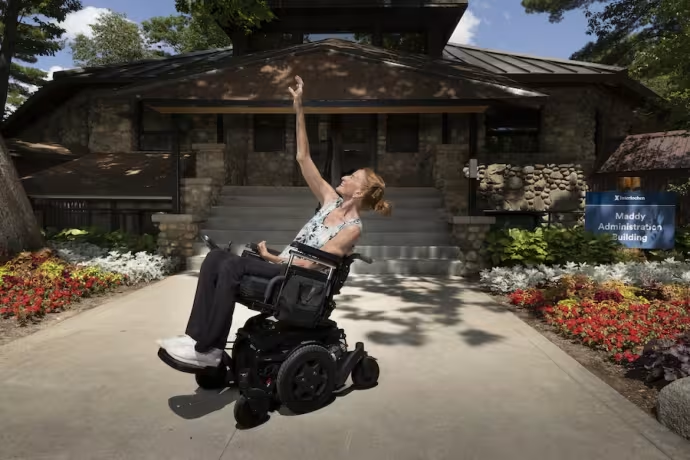
Born in Berlin at the beginning of World War 2, Ginger Lane (IAC/NMC 50, 52, 54-56) was sent to the United States as a refugee after the war, where she was adopted by an arts-loving couple who recognized her early passion for dance. As a 10-year-old Junior camper, she met Hildegarde Lewis, Interlochen’s first director of dance, who encouraged her continued dance training back home in Chicago. After receiving her B.S. in theater and communication from Northwestern University, she performed and taught throughout the Chicago area, owning a dance studio and choreographing for area theaters and school districts.
When she was injured in a ski accident in 1984, she was determined to keep dancing. Now using a wheelchair, she is an advocate for dancers with disabilities and has collaborated with organizations in Chicago and beyond. In 2000, she was named one of “100 Women Making a Difference” in Today’s Chicago Woman magazine. Before retirement, Ginger was the arts and culture project coordinator at Access Living, providing support for Chicago’s disability community. In December 2019, she was named to Chicago’s Cultural Advisory Council; and in 2022, she received the Distinguished Service to the Dance Field award from See Chicago Dance. Ginger’s daughter, alumna Beth Lane (IAC/NMC 75, 77-78), directed UnBroken, a documentary about Ginger and her siblings during and after World War 2.
Dancers with disabilities add to the vibrancy of a dance culture. Disability dance can contribute in a political sense, to fight oppression and discrimination so that we are seen as equals in the community.