What is fine arts in high school? A guide to creative education
Learn what fine arts in high school means, how they fit into graduation requirements, and why creative education matters more than ever.
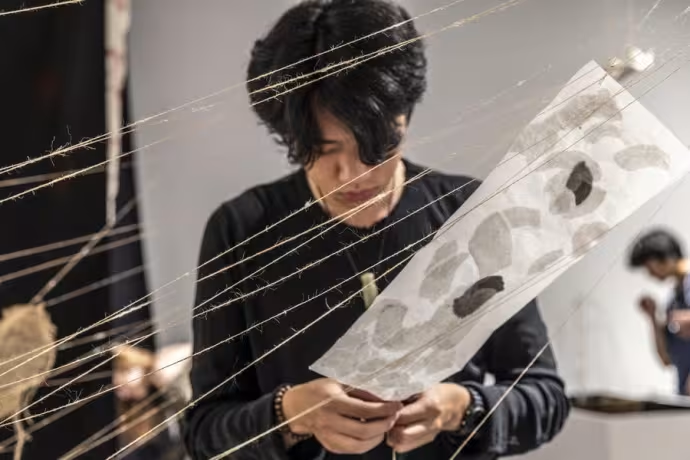
A visual arts student at Interlochen Arts Academy sets up an exhibition.
Updated: October 27, 2026
Students study fine arts in high school to help develop problem-solving skills, emotional intelligence, and collaboration—the same abilities that drive success in every career. Whether students paint pictures, deliver monologues, or practice an instrument, exploring fine arts in high school teaches them how to think differently, act boldly, and connect deeply with the world.
Many students take fine arts courses in high school, but not all of them have clarity about what “fine arts” actually is. This article breaks down everything you need to know about fine arts in high school: what the term means, what counts as fine arts, whether it’s hard, and why now is a great time to study the arts.
What does "fine arts" mean?
Historically, fine arts referred to creative disciplines valued for their aesthetic and intellectual qualities—painting, sculpture, architecture, music, and poetry. These were “fine” because they were created for beauty and expression rather than utility.
Today, the definition has expanded. Fine arts in education now includes visual arts, performing arts, and digital arts such as photography, animation, and graphic design. These arts can be enjoyed for their own sake, or pursued as stepping stones to a career in the arts.
In short, what is considered fine arts in high schools now spans any subject where creativity, expression, and aesthetic understanding are central. Some districts even include creative writing and fashion design.
What classes are fine arts in high school?
The question of what classes are fine arts in high school depends on the school, but most programs fall into four broad categories: visual arts, performing arts, digital/media arts, and literary or interdisciplinary arts.
Visual Arts
Visual arts courses explore form, color, texture, and meaning. Students learn to express ideas through imagery and design while gaining technical skills and cultural insight.
Typical classes include:
- Drawing & Painting
- Sculpture & Ceramics
- Photography & Printmaking
- Fashion Design & Textile Arts
- Art History or Appreciation
Performing Arts
Performing arts courses focus on communication, collaboration, and emotional depth—skills that benefit students far beyond the stage.
Common options include:
- Music: Band, orchestra, choir, jazz ensemble, and theory
- Theatre: Acting, stagecraft, directing, and script analysis
- Dance: Ballet, jazz, modern, and choreography
- Technical Theatre: Lighting, costume design, sound
Digital & Media Arts
As technology has reshaped creativity, what courses are considered fine arts in high school now includes digital and media-based disciplines.
Students might take:
- Film & Video Production
- Animation & Motion Graphics
- Graphic Design
- Multimedia Storytelling
- Photography or Digital Illustration
These programs teach both artistic storytelling and technical fluency. Many align with Career and Technical Education (CTE) standards while still qualifying as fine arts if creativity is the focus.
Literary Arts
Not all fine arts are visual or performative. Creative writing, poetry, and playwriting often fall under the fine arts umbrella. Here are some popular classes:
- Creative Writing
- Poetry Workshop
- Spoken Word & Performance Poetry
- Playwriting & Screenwriting
- Literary Magazine Production
Interdisciplinary Arts
Interdisciplinary arts programs let students blend mediums—mixing dance with visual art, or film with music—to create new forms of expression. Classes might include:
- Interdisciplinary Arts
- Contemporary Arts Performance and Culture
- Individual and Collaborative Studio
- Portfolio and Resume Development
Why do high school students have to take fine arts classes?
Fine arts programs offer both academic and social-emotional benefits for students, shaping not only how they see the world but how they engage with it.
Academic benefits
Research from Education Next reveals that students in arts courses show higher test scores, better attendance, and greater academic engagement.
Arts education also strengthens problem-solving and innovation—skills that drive success in STEM, business, and beyond. The Arts Education Partnership reports that creative learning “prepares students for the next America” by developing flexible, analytical thinkers.
Emotional and social growth
The benefits go far beyond academics. According to the National Endowment for the Arts, arts participation builds self-esteem, empathy, and cultural understanding. Other elements of emotional and social growth include these traits:
- Confidence: Performing or exhibiting teaches students to take creative risks.
- Resilience: The creative process models perseverance through trial and error.
- Empathy: Art connects students across cultural and emotional boundaries.
In a diverse, fast-changing world, fine arts education isn’t just enrichment—it’s preparation for real life.
Do you have to take fine arts classes to graduate?
According to the Education Commission of the States, over 40 states mandate at least one credit—usually a year-long course—in visual or performing arts.
There can be some flexibility within these requirements: some districts count film, design, or photography as possible courses. In addition, some states allow CTE, or Career and Technical education, to count towards these requirements if the class is creative in focus.
At institutions like Interlochen Arts Academy, students go far beyond state minimums. They major in one of seven disciplines—music, theatre, dance, visual arts, creative writing, film, or interdisciplinary arts—while earning a college-prep education.
FAQs
What are fine arts in high school?
Fine arts in high school include visual, performing, digital/media, and literary arts—subjects that emphasize creativity, skill, and interpretation.
What courses are considered fine arts in high school?
Depending on district policy, classes can include art, ceramics, photography, band, choir, theatre, dance, film, animation, graphic design, and creative writing.
Is fine arts class hard?
Whether a fine arts class is hard depends on the student and the subject. These classes require focus, practice, and creativity, which can be challenging, but many students find them highly rewarding because they allow personal expression and hands-on learning.
Do colleges care about fine arts classes?
Yes. Colleges value fine-arts coursework for the creativity, discipline, and collaboration it represents. Liberal arts schools often require or recommend it.
What’s the difference between fine arts and electives?
Fine arts are elective classes that focus specifically on creativity and aesthetic production. All fine arts are electives, but not all electives are fine arts.
Conclusion
Fine arts classes teach students not only how to create but how to think. Fine arts classes build flexible, emotionally intelligent, culturally aware learners who go on to find success in a wide range of fields, from science and business to music and other creative pursuits. Students enjoy a deeper exploration of their humanity as they learn skills which apply across countries and cultures.
Whether sketching, composing, filming, or performing, students who engage in fine arts in high school aren’t just earning credits—they’re learning to innovate, empathize, and lead.
Dive deeper into Interlochen Arts Academy with a free digital viewbook