What is the average class size at arts high schools?
Class size shapes every part of the high school experience, from how often you speak up in rehearsal to how much feedback you receive on an essay. At specialized arts high schools like Interlochen Arts Academy, those numbers look different than what you may find at traditional public schools.
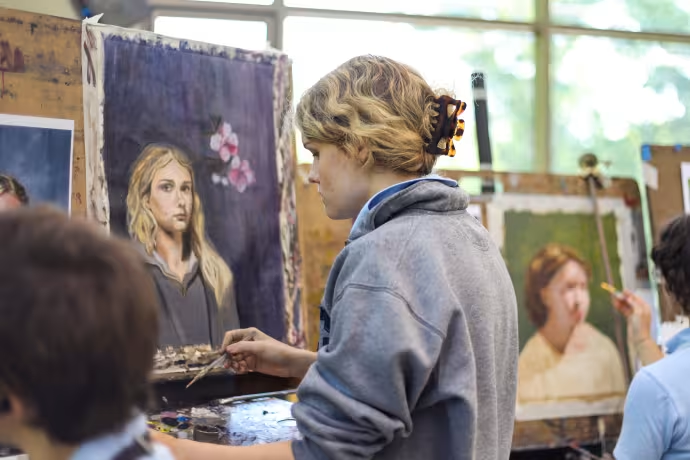
If you are comparing arts high school options for your family, understanding the typical classroom environment can help you set realistic expectations and find the right fit.
This article breaks down what average class sizes and student-teacher ratios look like at dedicated arts high schools across the United States, why those numbers matter for young artists, and how Interlochen Arts Academy approaches classroom learning.
Key takeaways: What is the average class size at arts high schools?
- Most specialized arts high schools keep academic class sizes between 10 and 22 students, well below national public school averages.
- The national average for departmentalized high school classes is about 24 students, according to the National Center for Education Statistics (NCES).
- A lower student-teacher ratio gives faculty more time for one-on-one feedback, which is critical in arts disciplines.
- Interlochen Arts Academy maintains an average academic class size of 11 students, with arts instruction ranging from individual lessons to large ensemble groups.
- Class size alone does not determine quality, so look at how a school pairs small groups with qualified faculty and strong academic programs.
What is the average class size in a typical U.S. high school?
Before comparing arts schools, it helps to know the national baseline. Data from the NCES shows that the average departmentalized high school class in the U.S. holds about 24 students.
The average student-teacher ratio across all public K-12 schools sits at approximately 15 students per teacher. That ratio varies widely by state, from roughly 11:1 in states like Vermont and Maine to more than 22:1 in California and Utah.
These figures give you a useful reference point. When a school reports class sizes of 10 to 14, you know it is operating below the national norm.
How do class sizes at specialized arts high schools compare?
Specialized arts high schools consistently report smaller academic classes than traditional public schools. For example, Perpich Center for Arts Education in Minnesota reports an average class size of 14 students, with enrollment capped at 310, whereas Harding Fine Arts Academy in Oklahoma City reports class sizes of 15 to 20 students.
San Francisco High School of the Arts keeps an even smaller ratio at 10:1, with most classes holding ten or fewer students. These numbers reflect a deliberate choice by arts-focused institutions to keep groups small enough for individualized attention.
Why does class size matter for young artists?
In arts education, feedback is everything. A music student preparing for an audition needs personalized coaching. A visual arts student developing a portfolio benefits from close critique sessions with faculty who know their work well.
Smaller classes make this kind of attention possible. When a faculty member works with 11 students instead of 25, they can adjust lessons to match individual skill levels, catch technical issues early, and build meaningful mentoring relationships over time.
Research consistently links smaller class sizes to improved academic outcomes, better student engagement, and stronger social development. For young artists balancing rigorous academics with intensive studio work, those benefits carry extra weight.
What is the student-teacher ratio at arts boarding schools?
Arts boarding schools tend to report some of the lowest student-teacher ratios in secondary education. Because students live on campus and attend both academic and arts classes daily, faculty serve multiple roles as instructors, mentors, and advisors.
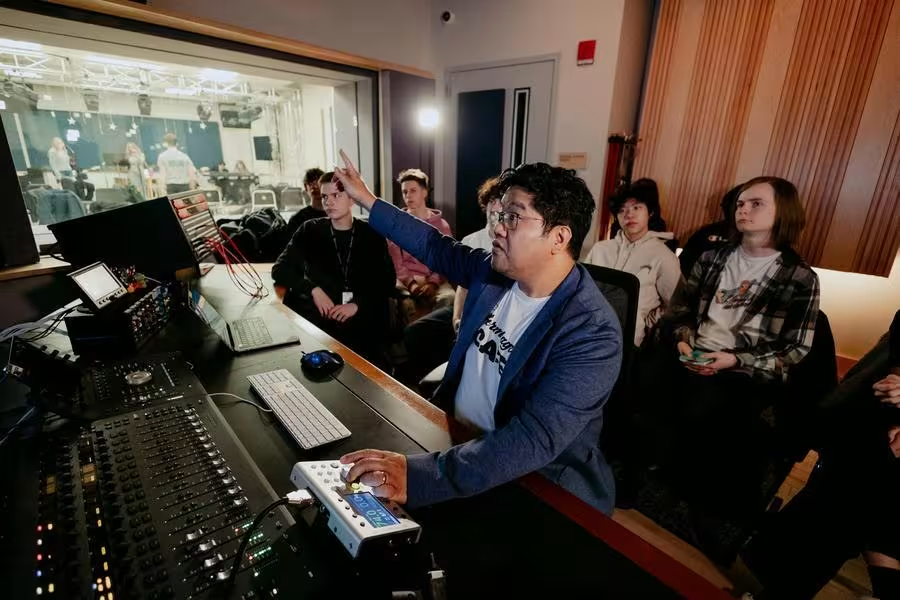
Arts instruction ranges from one-on-one lessons to ensemble rehearsals, depending on the discipline. That range means a student studying creative writing might workshop in a small seminar while a music student rehearses with a full orchestra.
This flexibility is one reason boarding schools for the arts often attract families who want both the rigor of conservatory-level training and the personal attention of a small school.
How Interlochen Arts Academy approaches class size
Interlochen Arts Academy educates more than 550 students annually from across the United States and around the world, yet the school keeps academic classes small. An average class of 11 students allows faculty to tailor instruction to each student's learning style and goals.
Interlochen offers seven arts majors: Music, Theatre, Dance, Visual Arts, Film & New Media, Creative Writing, and Interdisciplinary Arts. Each major has its own studio structure designed around student needs, and students work closely with world-class faculty in their chosen discipline, receiving the kind of direct, personal guidance that larger programs cannot always match.
That combination of small academic classes and individualized arts training is part of why Interlochen graduates regularly receive acceptances to institutions like Curtis Institute of Music, Eastman School of Music, Harvard University, The Juilliard School, Princeton University, Rhode Island School of Design, and many more. The personal attention students receive prepares them for the demands of college-level work and professional artistic life.

What should families look for beyond class size?
Class size is an important data point, but it doesn’t tell the whole story. Faculty credentials matter as much as group size. A class of 12 with a faculty member who has decades of professional experience looks very different from a class of 12 with less experience.
At Interlochen Arts Academy, faculty bring world-class credentials from leading institutions and active professional careers. Their teaching draws from real-world experiences in the industry that offers students a head start on professional life.
In addition to faculty expertise, it’s also important to consider whether the school integrates arts and academics or treats them as separate tracks. Schools that weave creative thinking into every subject tend to produce students who think critically across disciplines.
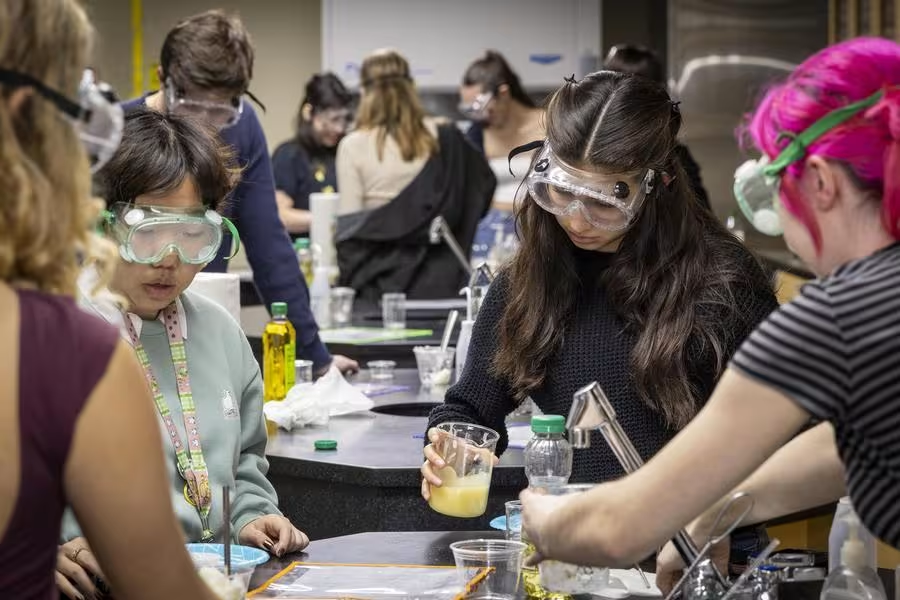
Interlochen Arts Academy encourages creative thinking across all subjects, tailoring liberal arts and math and science courses to the creative mind. Students learn in a hands-on, engaging environment suited for an artist’s mind, such as learning agriculture science in an actual greenhouse.
How do arts high school class sizes affect college readiness?
Smaller classes create habits that translate directly to college success. Students who are accustomed to seminar-style discussions, regular one-on-one check-ins with faculty, and self-directed studio work arrive at college with confidence in their ability to manage demanding schedules.
Interlochen Arts Academy also offers AP courses in Calculus and Statistics, along with dual enrollment opportunities through Indiana University where students can earn college credit. The school's 100% graduation rate and strong college placement record reflect how smaller learning environments prepare students for life after high school.
For families weighing whether an arts high school can deliver both artistic growth and academic preparation, class size is one of the clearest indicators that a school takes both seriously.
In conclusion: How to use class size data when choosing an arts high school
Average class sizes at specialized arts high schools range from as few as 10 to about 22 students, with most falling below the national public school average of 24. That smaller scale enables the personal instruction, detailed feedback, and close mentorship that young artists need to grow.
As you research programs, ask how the school structures both academic and arts classes, what the financial aid options look like, and whether faculty bring professional-level expertise.
FAQs about average class sizes at arts high schools
What is the average class size at a specialized arts high school?
Most specialized arts high schools keep academic class sizes between 10 and 22 students. That is significantly smaller than the national average of 24 for departmentalized high school classes. Smaller groups allow faculty to give each student more direct feedback and personalized instruction.
How does class size differ between arts and academic courses?
Academic classes at arts high schools typically hold 10 to 15 students. Arts classes vary more widely based on the discipline.
A private voice lesson involves one student and one faculty member, while an orchestra rehearsal may include dozens.
Why do arts high schools have smaller class sizes?
Arts education depends on individualized feedback. A dancer needs direct correction on technique, and a writer benefits from close editorial guidance.
Smaller classes give faculty the time and space to mentor each student. Interlochen Arts Academy keeps classes small so that every young artist receives the attention their creative development demands.
Does a smaller class size improve academic outcomes?
Research from the National Center for Education Statistics supports a connection between smaller classes and stronger academic performance. Students in smaller groups tend to score higher on tests and participate more actively.
How does Interlochen Arts Academy's class size compare to other arts schools?
Interlochen Arts Academy reports an average academic class size of 11 students, which is smaller than most arts high schools nationally, where averages range from 14 to 22.
Interlochen Arts Academy pairs this small-class approach with world-class faculty and over 400 annual performances, so young artists receive both rigorous training and personal mentorship.
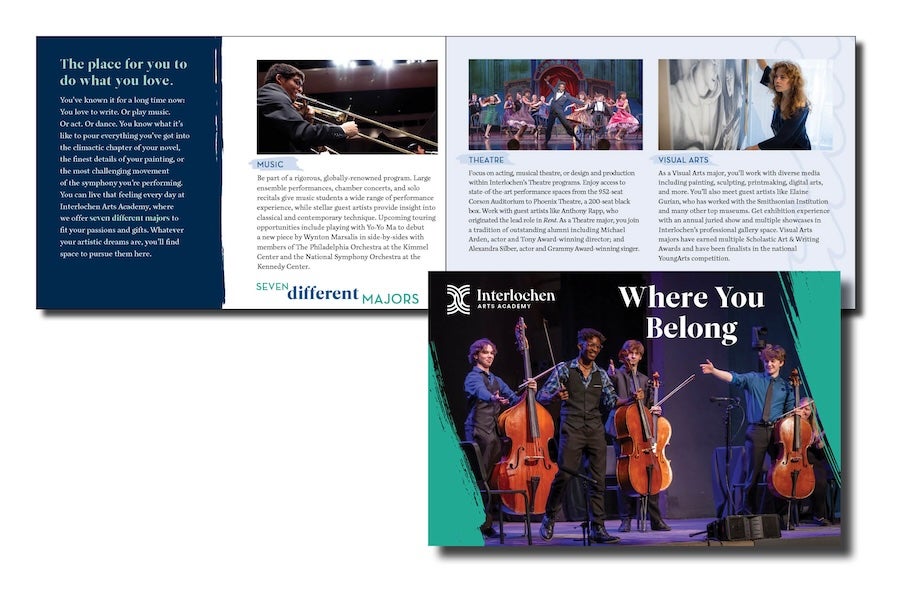
Dive deeper into Interlochen Arts Academy with a free digital viewbook