A guide to the most unique boarding schools in the US
From world-renowned arts institutions to outdoor farmsteads, these unconventional boarding schools provide exceptional learning experiences that redefine what education can be.
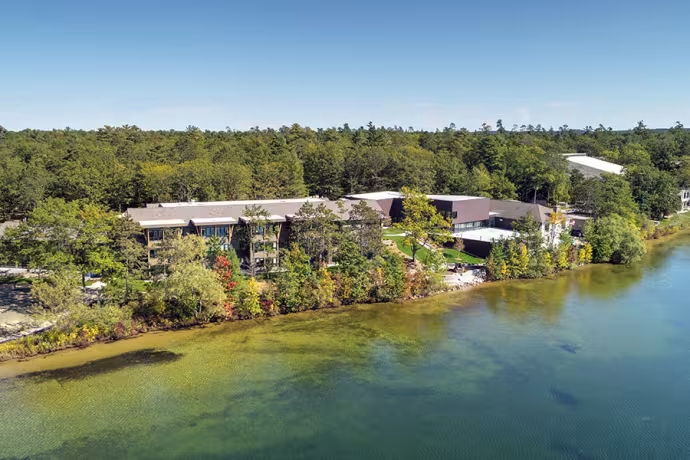
An aerial view of Interlochen Center for the Art's Dow House and the Dance Center.
Updated: September 23, 2026
Among the top boarding schools in the US lie a group of specialized institutions designed to nurture specific talents, address particular learning styles, or simply provide a distinct educational experience that stands apart from the traditional.
As these unique boarding schools grow in popularity, we’ve created a guide to highlight the variety of schools available, including a list of specialized schools and insights on how to choose the right program for you or your child.
Arts and creative programs
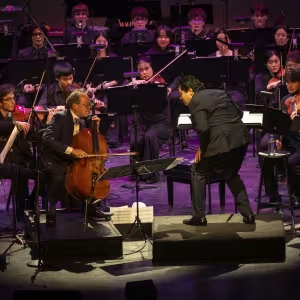
Where art, academics, and nature intersect: Interlochen Arts Academy
Located on a picturesque 1,200-acre campus in northern Michigan, Interlochen Arts Academy is one of the world's premier fine arts boarding schools. Founded in 1962 as an extension of the renowned Interlochen Center for the Arts, this institution serves grades 9-12 and post-graduate students who demonstrate exceptional talent in music, theatre, dance, visual arts, creative writing, film, or interdisciplinary arts.
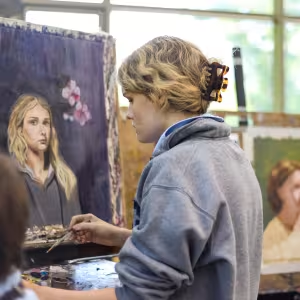
What truly distinguishes Interlochen is its dual commitment to pre-professional arts training and college-preparatory academics. Students typically spend mornings in academic classes and afternoons immersed in their artistic disciplines, working with faculty who are often accomplished professional artists themselves. The campus features world-class facilities including multiple theatres, concert halls, recording studios, dance studios, and specialized visual arts spaces.
Specialized academic programs
The STEM pioneer: North Carolina School of Science and Mathematics
Established in 1980 as the nation's first public residential high school focused on STEM education, the North Carolina School of Science and Mathematics (NCSSM) in Durham has developed into one of America's most innovative educational institutions. This tuition-free public boarding school serves academically talented juniors and seniors from across North Carolina, offering an unparalleled depth of curriculum in mathematics, computer science, engineering, and the natural sciences.
NCSSM Students conduct original research alongside faculty mentors and through partnerships with nearby research universities, biotech companies, and Research Triangle Park institutions. The curriculum includes specialized courses rarely found at the secondary level—quantum mechanics, genomics, artificial intelligence, multivariable calculus, and organic chemistry—taught at near-college levels.
Second chances in the Colorado Rockies: Eagle Rock School
Founded in 1993, Eagle Rock School in Estes Park, Colorado offers a tuition-free residential program specifically designed for students who have struggled in conventional educational settings. This year-round program serves approximately 75 students aged 15-21 who commit to the school's principles of personal growth, intellectual engagement, and community contribution.
Eagle Rock's distinctive educational model eliminates traditional grade levels in favor of individualized learning plans and demonstration-based assessment. Students progress through requirements at their own pace, with graduation based on demonstrated mastery rather than time spent. The curriculum emphasizes project-based learning, with courses designed around essential questions and real-world applications rather than subject-area silos.
The ultimate athletic talent incubator: IMG Academy
Located in Bradenton, Florida, IMG Academy represents perhaps the most comprehensive sports education available at the secondary level. Originally founded as a tennis academy by coaching legend Nick Bollettieri in 1978, IMG has expanded into a multi-sport boarding school that combines elite athletic training with college-preparatory academics for students in grades 6-12 and post-graduates.
Students specialize in one of eight sports (baseball, basketball, football, golf, lacrosse, soccer, tennis, or track & field), training daily with coaches who often have professional or Division I collegiate coaching experience. Beyond sport-specific training, students receive personalized development in athletic performance (strength, speed, agility), mental conditioning (focus, resilience, visualization), leadership training, and sports nutrition. This comprehensive approach has produced hundreds of collegiate athletes, Olympic medalists, professional draft picks, and Grand Slam champions—establishing IMG as perhaps the ultimate incubator for athletic talent in America.
Outdoor, adventure, and experiential schools
A working farm with a progressive vision: The Putney School
Established in 1935 on a working dairy farm in Vermont, The Putney School pioneered a progressive approach to education that balances intellectual rigor with practical skills, arts, and physical labor. The school's founder, Carmelita Hinton, envisioned an educational community where students would learn "to work with their hands as well as their heads," a philosophy that continues to guide the school today.
Students engage in a full college-preparatory curriculum while also participating in the school's work program—maintaining farm operations, splitting firewood for heating buildings, working in the gardens that supply the kitchen, and managing other essential campus functions. This labor is not framed as punishment or even chores, but as integral to the educational philosophy, teaching self-reliance and connection to physical systems that support daily life.
Horses, outdoor adventure, and education: The Thacher School
Founded in 1889 in the Ojai Valley of California, The Thacher School combines rigorous academics with a mandatory horse program that has defined its distinctive approach for over a century. Each freshman is assigned a horse for the year, taking full responsibility for its care, feeding, grooming, and exercise—regardless of prior equestrian experience.
This horse program serves as a cornerstone of the school's character education, teaching responsibility, humility, and partnership with animals. Students learn to prioritize another being's needs above their own convenience, developing habits of conscientiousness that transfer to other areas of school life. Beyond daily horse care, students participate in trail rides, gymkhanas, and pack trips into the surrounding Los Padres National Forest.
The living classroom in rural Connecticut: Pomfret School
Set among 500 acres of Connecticut countryside, Pomfret School has transformed traditional boarding school education through its innovative "Project: Pomfret" program. This initiative integrates immersive, project-based learning blocks throughout the academic calendar, allowing students to explore topics ranging from food systems to sustainable design, wildlife conservation to social justice—all within the context of the school's extensive campus resources.
What makes Pomfret particularly distinctive is its "Living Classroom" approach, which utilizes the campus as a laboratory for environmental studies. Students monitor forest succession in designated research plots, manage sustainable agriculture operations, conduct water quality studies in campus waterways, and implement renewable energy initiatives. The school's greenhouse, weather station, astronomical observatory, and forest trails provide infrastructure for authentic scientific inquiry.
Alternative learning philosophies
Meditation for young minds: The Maharishi School
Located in Fairfield, Iowa, the Maharishi School offers a truly alternative approach to education. Based on transcendental meditation practices and principles developed by Maharishi Mahesh Yogi, the school integrates meditation directly into the daily schedule, with students practicing transcendental meditation twice daily to develop consciousness as a foundation for effective learning and living.
The academic program follows college-preparatory standards but frames subjects through the lens of "consciousness-based education," exploring connections between traditional disciplines and principles of natural law. Students study the Science of Creative Intelligence alongside conventional subjects, examining how fundamental patterns of intelligence express across different fields. This educational approach, focusing on developing inner consciousness alongside external knowledge, creates a truly distinctive learning environment.
Quaker simplicity in rural Iowa: Scattergood Friends School
Founded in 1890 as a Quaker boarding school, Scattergood Friends School operates on 126 acres of prairie and farmland in rural Iowa. This intentionally small community of approximately 40 students and 15 staff members practices educational principles rooted in Quaker values: simplicity, peace, integrity, community, equality, and stewardship.
The school’s working farm forms a central component of both educational programming and daily life. Nearly 60% of food consumed on campus comes from the school's organic farming operations, creating direct connections between students' work and community sustenance.
Scattergood also maintains distinctive community practices including daily "Collection" (silent reflection in the Quaker tradition), consensus-based decision-making, and weekly all-school meetings where community concerns are addressed collectively. Academic courses maintain college-preparatory rigor while incorporating Quaker values and experiential learning. This combination of intellectual engagement, practical work, and intentional community creates a rare educational environment focused on developing the whole person rather than merely academic achievement.
How to choose the right boarding school
Practical considerations
Logistics matter significantly when evaluating boarding school options. Consider:
- Geographic location and travel requirements
- Total costs (tuition, travel expenses, special equipment, additional fees)
- Calendar structure and vacation periods
- Religious affiliations or requirements
- Availability of financial aid or scholarships
Academic considerations
While unique features might initially attract interest, academic quality remains paramount when selecting a boarding school. Consider whether the curriculum prepares students for their next educational steps—whether that's highly selective universities, specialized arts conservatories, or alternative higher education paths. Review standardized test results, college matriculation lists, and academic offerings in areas relevant to your student's interests and goals.
Look beyond marketing materials to understand teaching methods, class sizes, faculty qualifications, and available support services. For students with specific learning needs, investigate accommodations and specialized resources. The most distinctive educational environment still must deliver solid academic preparation appropriate to your student's aspirations.
Cultural fit and community values
Each unique boarding school cultivates its own culture and community values. Some emphasize intellectual debate and academic intensity; others prioritize creative expression, environmental stewardship, or intercultural understanding. Consider whether these values align with your family's priorities and your student's temperament.
Visit campuses whenever possible to observe community dynamics firsthand. Pay attention to how students interact with each other and with adults, what behaviors are celebrated, and how the community manages conflicts or challenges.
For schools in remote locations or with unusual structures (like sailing schools or nomadic programs), carefully assess whether your student would thrive in these environments. A wilderness school might sound appealing in concept but prove challenging for a student who strongly prefers urban environments. Similarly, an arts-intensive program requires genuine passion for the discipline—not just casual interest.
Conclusion
The landscape of unique boarding schools offers extraordinary possibilities for students seeking education beyond conventional boundaries. These institutions demonstrate that meaningful learning happens in many contexts—in the classroom, on the tennis court, in the practice room, or on the trail.
If you're intrigued by these possibilities, begin exploring specific schools that align with your student's interests and learning style. Reach out directly to admission offices, connect with current students or alumni, and when possible, experience these remarkable communities firsthand. The right educational environment can unlock potential in ways neither students nor parents might have imagined possible.
FAQ
What is the #1 boarding school in America?
There is no perfect, “one size fits all” boarding school for every student. There are a variety of top-tier boarding schools in the US that offer specialized environments and learning styles—we recommend looking into schools that match your student’s interests, learning styles, and cultural needs.
Which state has the best boarding schools?
America’s best boarding schools are more wide-spread than you’d expect—each state has its own list of unique programs to choose from. We recommend students and their families consider what locations suit your child’s needs best when selecting a boarding school.
We’ve previously put together a list of some of the top boarding schools in Michigan for families to consider.
What's the most prestigious boarding school?
Just as there is no “one size fits all” boarding school for every student, there is also no single “most prestigious” institution. Each of the schools we’ve listed above are prestigious in their own specializations, and many others excel in their own unique curriculum.
What is the most unusual boarding school?
What may seem unusual to one person may feel like home to another—the boarding schools we’ve listed in this article are unique in their specializations and locations, but we wouldn’t go as far to say they’re unusual. All boarding schools share the same responsibility to offer a supportive environment for students to thrive in—something that is not unusual at all.
Dive deeper into Interlochen Arts Academy with a free digital viewbook