Oral History Interview with Phillip Monteith
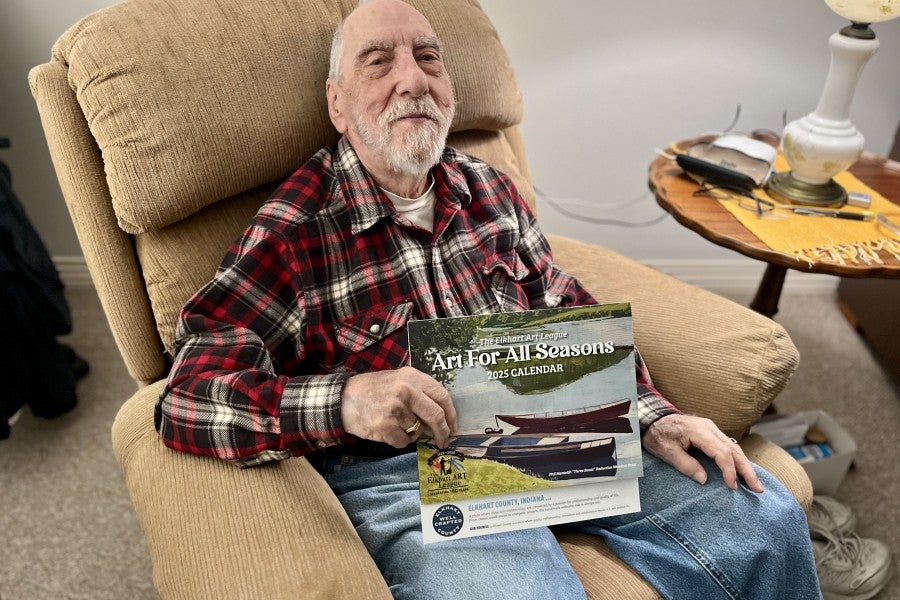
Interlochen Affiliation: NMC 45
Interview Date: February 11, 2025
Phillip Monteith attended the National Music Camp in 1945, studying cornet. He continued playing cornet for 40 years, alongside a distinguished career as an arts educator.
This oral history is provided free by the Archives of the Interlochen Center for the Arts (ARTICA). It has been accepted for inclusion in Interlochen’s audio archive by an authorized administrator of Interlochen Center for the Arts. For more information, please contact archives@interlochen.org.
00:00:00 PHILLIP MONTEITH
Hi.
00:00:00 MERYL KREIGER
Hi. How are you?
00:00:02 PHILLIP MONTEITH
I'm not sure I'm going to survive this because I've never done an interview before.
00:00:08 MERYL KREIGER
Well, don't worry about it. It's pretty painless. And we'll, I'll walk you through everything.
00:00:13 PHILLIP MONTEITH
Okay.
00:00:14 MERYL KREIGER
So the first thing that I wanted to do is just tell you. What we're building here is essentially an oral history of Interlochen. This place, you know, that has shaped all of our lives. The way we're doing it is by collecting the stories of all of our journeys through this place and the things that we went through and the things that affected us as we were there to tell the story of the place.
00:00:38 PHILLIP MONTEITH
Well, I must tell you that I had graduated from high school. This was 1945. But this was the first time I'd ever been away from home, except for maybe for a week, a church group or something like that. But to be there all summer long was a real... I don't know how to describe it, but it was different.
00:01:03 MERYL KREIGER
How did you learn about Interlochen? What brought you there in the first place?
00:01:06 PHILLIP MONTEITH
I really don't know. All of a sudden my folks said, you know, it's a graduation thing. Have you ever heard of Interlochen? Well, I didn't. Maybe at that time I had, but it was something brand new. And at that time, it was associated with the University of Michigan, but it was not part of it. So I had no idea what was going on. I'm going into this, I'm- I don't know whether this is any good for it anyhow, but my father drove me there and that was probably four.. Well, there'd been a four hour drive from our house. He drove me there, and the first thing I had to do was find a place to live. If I remember now, this has been a long, long time ago. It was not really a hut, but I think there were six, six boys in it. So that's where I had to stay. But the orchestra was already rehearsing. There was a guest director, and when I got set in this hut, I had to go and perform. And I'd never done.. what do I want to say.. I can't think of the word, but that that'll happen often enough. But anyhow, beyond that, I went in and played with the rest of them, and this was probably every day, something like that. But I think each time they had guest directors, I don't know who that would have been. Giddings and I cannot remember. There was a second man, the two of them, that set the thing up. They were both there at that time, and I don't remember whether Giddings did any directing, but I don't know whether he did or not. But he was there wandering around and his friend was there too, and that's my first impression of it.
00:03:11 MERYL KREIGER
What was your instrument?
00:03:13 PHILLIP MONTEITH
My instrument at that time was cornet. Now they would insist on being a trumpet, and that's what I had. See, I started out when I was nine, uh, taking piano lessons with my aunt. And two years later, I was introduced to cornet. And that's what I played for the next 40 years. And so eventually I had to have a trumpet and both of them. But that's how that was there.
00:03:46 MERYL KREIGER
Do you have a favorite memory of the time while you were there?
00:03:50 PHILLIP MONTEITH
Well, that's a long, long time. That's 80, 85 years ago, something like that. And I don't remember. I do remember one of the one of the things that's always impressed me, the ballet teachers. And I don't know where they came from, the University of Michigan, or whether they were professionals or whatever, teachers. But when they would come in, at that time, I- maybe there were bleachers where people could come in, but there were always up the hills and they'd come running down. They wouldn't be walking. I don't think they had ballet shoes on, but they came running down to wherever they were going to have classes, and I don't think I ever saw them walk. They always ran, came, come down. There were little huts as I remember them. They were huts and I don't remember where they were. Little log cabins. We could practice in any of these. We didn't practice where we lived, but we could go to any of these. And those were also where we got the lessons from professional teachers. And so that's where we would go. We were given lessons and we practiced on them. This guy and I don't remember anybody's name except Mr. Giddings. But he told me, well, you know, you have the fastest triple tongue of anybody I've ever heard. Well, I didn't know I knew that. But anyhow, after that length of time, well, I practiced, I did the stuff that they were supposed to be. But there were two lakes at that time. Now, I don't know whether that's still- at that time, if I remember right, one was Wahbekaness and the other was Wahbekanetta, one was girls, one was boys. And if you were going to be on, in a canoe, you had to go out and swim for roughly a mile before you could take a canoe out. And so I did do that. But beyond that, now you're going to have to ask me some questions, because I've gone as far as I can go.
00:06:08 MERYL KREIGER
You're doing great. I will tell you, the practice huts are still there.
00:06:13 PHILLIP MONTEITH
Are they?
00:06:14 MERYL KREIGER
Yep. Students in the summer still take lessons in many of the practice huts, although there's a lot more buildings on campus now. So there are a lot more formal buildings for different parts of, of the campus.
00:06:30 PHILLIP MONTEITH
Okay.
00:06:30 MERYL KREIGER
Now a percussion building and a piano building and a this and a that. And so a lot of other things. But The Bowl is still there, where you performed.
00:06:40 PHILLIP MONTEITH
Okay.
00:06:41 MERYL KREIGER
The two lakes are still there. I was a camper 40 years after you were, actually a little less than that. And I too had to pass a swimming test before I could go out and-
00:06:52 PHILLIP MONTEITH
Did you?
00:06:53 MERYL KREIGER
Oh, absolutely. And I learned how to sail there and all of those things. Yep. And the girls and the boys sides. The two lakes are still there. Although people don't often use the traditional names for the lakes anymore. They're mostly just called Green Lake and Duck Lake these days, but they're both still there. And yep, the old stuff is mostly still there. There are a few buildings that are gone, like Grunow, the old theater. They tore that down and built a new one. And many, many people have many regrets and really miss the old theater building. So you were talking about Dr. Giddings. He's clearly somebody who stuck out for you. Why? What was so-
00:07:33 PHILLIP MONTEITH
Because he was a big man. And everybody I'd associate with, were smaller.
00:07:38 MERYL KREIGER
Okay.
00:07:39 PHILLIP MONTEITH
If I remember right, he was a good. Now his friend. What was the other man's name? Do you know?
00:07:44 MERYL KREIGER
Dr Maddy?
00:07:45 PHILLIP MONTEITH
Oh, yeah, it would be. Yeah. Maddy.
00:07:49 MERYL KREIGER
Mhm. Joseph Maddy.
00:07:50 PHILLIP MONTEITH
Why didn't I know that? That should have been a strong name.
00:07:56 MERYL KREIGER
What do you remember about him?
00:07:57 PHILLIP MONTEITH
About him?
00:07:58 MERYL KREIGER
Yes, about Dr Maddy.
00:08:00 PHILLIP MONTEITH
Well, I think maybe he was a kind of a guide of the things going on at that time. I really, I don't know. I remember the name because he was very important, but I don't remember what he was doing.
00:08:15 MERYL KREIGER
He founded Interlochen.
00:08:17 PHILLIP MONTEITH
Oh, he's the one.
00:08:18 MERYL KREIGER
He's the one.
00:08:19 PHILLIP MONTEITH
Okay, well, I thought the two of them did that together in a sense.
00:08:24 MERYL KREIGER
He had all sorts of people who worked with him, and Giddings certainly worked with him. Absolutely. But Joe Maddy was the one who created NMC and ended up creating the high school. That's that started in the 1960s.
00:08:38 PHILLIP MONTEITH
Okay. Huh.
00:08:40 MERYL KREIGER
Yeah.
00:08:41 PHILLIP MONTEITH
Now, when did it become associated specifically with University of Michigan?
00:08:48 MERYL KREIGER
I wish I remembered the dates. The affiliation stayed around for a very long time. In fact, there still is a relationship between Interlochen and the University of Michigan. It's changed over the years.
00:08:59 PHILLIP MONTEITH
Yeah.
00:08:59 MERYL KREIGER
It's changed over the years. But there was the All-State program, and then there was the national program.
00:09:07 PHILLIP MONTEITH
Okay. Now the dancers, for example, did they come from the university or were they private teachers that were-
00:09:16 MERYL KREIGER
I think they came from all over the place. I think they did. Yeah. Yeah.
00:09:21 PHILLIP MONTEITH
And I don't know about the teachers. I can picture him, but I cannot remember his name. I think he specialized in trumpet, but he was a smaller person.
00:09:34 MERYL KREIGER
Uh huh.
00:09:35 PHILLIP MONTEITH
But I didn't know where any of these people came. And they had different well-known directors coming in at that time, so I didn't know how they were contacted, other than maybe it's a vacation or a fun time to do one, one thing.
00:09:56 MERYL KREIGER
I hear you. Was there something that happened while you were there that felt important to you that had an impact on your life? What sticks out? Something, maybe a lesson you learned or something you saw, or an experience you had there. Maybe with your cabin mates. Maybe with your teachers, maybe with the orchestra.
00:10:19 PHILLIP MONTEITH
No, no, you're not going to want this. But the last day that I was there.. I'm going to do it anyhow. A girl came up to me. She says, I wanted to talk with you all the time that you were here, and now we're going home. And I still remember her name, she was from Cleveland. And for a while we wrote back and forth. But that's the first time I was ever associated with somebody who was interested- I mean, a girl, I- Okay, now you can use that, or you just throw it out, I don't care.
00:10:54 MERYL KREIGER
I want you to know the number of romances that started there that have resulted in lifelong partnerships and marriages. Many, many people have met there.
00:11:05 PHILLIP MONTEITH
Well.
00:11:06 MERYL KREIGER
Yes.
00:11:08 PHILLIP MONTEITH
We lost track over years. But anyhow. Yeah, but that's the only thing. And that has nothing to do with music.
00:11:17 MERYL KREIGER
It has to do with Interlochen. It has to do with the place and why and why everyone goes there.
00:11:23 PHILLIP MONTEITH
I don't know whether Gene told you, my other son lives in Interlochen.
00:11:29 MERYL KREIGER
I didn't know.
00:11:30 PHILLIP MONTEITH
Yeah. And he's, yeah. And they've lived there, what, 35 years? Something like that. Yeah. And the last time we were there, the five, four trumpet.. Well, the brasses from.. Well, anyhow, they travel all over the world. Oh. Canadian Brass. And they invited us down. And like they always do, they start at the back and come all the way down. And that was late. But that would be an information when I was then. See, when I left there, I went to.. Are you familiar with Transylvania University?
00:12:09 MERYL KREIGER
Pennsylvania University is in the University of Pennsylvania?
00:12:13 PHILLIP MONTEITH
No, Transylvania, t r a n?
00:12:15 MERYL KREIGER
No. Tell me more.
00:12:16 PHILLIP MONTEITH
This is in Lexington, Kentucky, and during the Civil War, the main building was a hospital. But after that, it became the oldest university west of the Alleghenies. And that's where I got my bachelor's. And I went to Cincinnati's Conservatory every two weeks to take lessons. Cornet, at that time, with one of Sousa's soloists. And that was an education because at that time. Well, that has nothing to do with it. But the bus I was on, blacks had to sit in the back, in the front and I'd never seen that before. That was that had nothing to do with Interlochen. But anyhow, from there, my masters I got at Indiana University, and three days after that I went into the Army, where I became a member of a band, of an army band and spend three days there. So I did everything that I had learned in all of these years of.. Well, I was an assistant director and did writing and all kinds of stuff for them. And all of that came about because I'd gone through all of these other areas. So that was 1950.
00:13:49 MERYL KREIGER
Mhm.
00:13:50 PHILLIP MONTEITH
Uh huh.
00:13:51 MERYL KREIGER
What do you remember about your time playing in the orchestra?
00:13:55 PHILLIP MONTEITH
I'm not real sure. I don't remember. I think I was a part of the orchestra, but I don't remember whether there were small groups that then I was a member of at that time at Interlochen.
00:14:11 MERYL KREIGER
Mhm.
00:14:12 PHILLIP MONTEITH
It makes sense that I would have been, but I don't know.
00:14:16 MERYL KREIGER
Why would it make sense that you would have been part of that?
00:14:19 PHILLIP MONTEITH
Well because that's one of the parts of that everybody was doing. And I don't remember about the choral, because I was interested in the instruments, but there must have been a choral society of some sort because that would have been inclusive.
00:14:40 MERYL KREIGER
Why do you think music is important. What was important about it to you in your life?
00:14:47 PHILLIP MONTEITH
Well, for one thing, I was with a larger group of musicians who were interested in music, and it was a different place I'd not been before. You make acquaintances and then you lose them because most of them were all over the country, I think. And so I don't know how to answer that, really.
00:15:16 MERYL KREIGER
You're answering it very well.
00:15:18 PHILLIP MONTEITH
Well, could be.
00:15:20 MERYL KREIGER
When you talk about spending time there, what is the thing that you tell other people about your time at Interlochen?
00:15:28 PHILLIP MONTEITH
That it was rustic, if you want that word, because it hadn't been built up yet. And I thought it was only 2 or 3 years old. But Gene says it was almost 15 years old.
00:15:41 MERYL KREIGER
It's more than that.
00:15:42 PHILLIP MONTEITH
But maybe it wasn't built up because they didn't have the finances to do that. I have no idea. But and I hadn't heard about it beforehand. I'm glad I went. I'm pleased that that happened.
00:15:59 MERYL KREIGER
Why are you glad you went?
00:16:01 PHILLIP MONTEITH
Well, because it he got me started. You see, when I went to college, I was going to be a chemist, and music was my secondary choice. The second year of chemistry, I discovered, in organic chemistry that I couldn't tell the changes of color. So I was colorblind. And so I traded instead of chemistry that became music. And that's what happened the rest of my life. And that was probably just as well, because I maybe wouldn't have been a good chemist anyhow.
00:16:43 MERYL KREIGER
So it became part of your journey?
00:16:45 PHILLIP MONTEITH
Yeah. Yeah.
00:16:47 MERYL KREIGER
So when you talk about it getting you started, what things did it help you with?
00:16:53 PHILLIP MONTEITH
Playing with others who were a whole lot better than me. That's one of the things, And I don't know the teacher I had, a different teacher than I had had, and I had good teachers to start with. That was another, a variety of things, just in general. The whole summer was totally different than any I'd ever had. And for a variety of things, you know, I met people I don't even remember, I could see pictures of different people. We played a lot of stuff. I'd never played in an orchestra before when I'd grown up with was a band, and that was part of it. But the variety of things that was going on and the difference in the directors, I learned a lot from the directors, not because I was copying them, but I found out, okay, this one's doing this is doing this back and forth. Yeah. Joseph Maddy, I forgot his first name. I remembered somebody. Well, my mind is gone.
00:18:15 MERYL KREIGER
Your mind's just fine.
00:18:17 PHILLIP MONTEITH
I don't know whether that answered your question or not.
00:18:20 MERYL KREIGER
It does. In fact, I'd love to hear more.
00:18:23 PHILLIP MONTEITH
Oh, well. Has nothing to do with it. But I went home on a train, and I'd never done that by myself.
00:18:31 MERYL KREIGER
So it was about learning how to explore the world became part of that journey for you.
00:18:37 PHILLIP MONTEITH
Suddenly I'm not hearing.
00:18:39 MERYL KREIGER
I'm sorry is. So Interlochen became part of a journey of you exploring, starting to explore the world.
00:18:45 PHILLIP MONTEITH
I- maybe so, yeah. Yeah, it could be. Yeah. I'd never been on a - well, I'd been on trains before going to Chicago and stuff like that, but I was always with somebody.
00:18:58 MERYL KREIGER
Where'd you grow up?
00:19:00 PHILLIP MONTEITH
In Elkhart, Indiana, which was the band instrument company of the world, really at that time. Now they're trailers, but they're, at that time, every street had a band or an orchestra instrument in it. And. Yeah.
00:19:18 MERYL KREIGER
That's wonderful. Thank you for talking about this. Is there like a concert or a performance or a day that kind of stands out? And don't worry if you don't remember names, that's not so important. But is there a particular day that stands out in your memory? Because I want to make sure that we share just the little things that people remember about our times there.
00:19:46 PHILLIP MONTEITH
Mhm. Okay. Well while I was in high school I was in the band but we had an orchestra too, and I don't think I ever played with the band. I remember band director. We had contests. Maybe they still do, that I did pretty well with, but the band director says, well, he never did very much, meaning me. And so. Well, anyhow, he went to Indianapolis and I don't know what happened to him, but anyhow, that was different anyway. But no, I never played in an orchestra until I got to- And that was before.
00:20:31 MERYL KREIGER
What did it feel like for you to play in the orchestra there with all of those talented other kids?
00:20:37 PHILLIP MONTEITH
Yeah, but I'd never done with strings. And then one of the first things I discovered at Interlochen was I didn't know how to switch from one key to another, for brasses anyway. Now they have the instruments. But at that time you had to transpose. And I hadn't the least idea how to do that. And this was supposed to be a trumpet in A, and mine was B flat. And so that, you know.. what'd you play?
00:21:12 MERYL KREIGER
I played clarinet.
00:21:13 PHILLIP MONTEITH
Did you? Okay.
00:21:14 MERYL KREIGER
And piano. But yeah. But so, I hear I'm nodding away because transposing is a fact of life for the clarinet.
00:21:21 PHILLIP MONTEITH
Okay. Well, I had to learn that, too. When I was in, in college, I went to another university over here because at that time I discovered there were musicians who were a whole lot better than I was, and I'd better be able to make a living. So I went to this other college, Goshen College, to get certification, and part of that was that I had to learn all of the different instruments. Clarinet, flute, bassoon, trombone, the whole works. Uh, the one thing I could not do, and I learned to play cello, my daughter plays cello. But one of the problems playing violin was that my little finger doubled down on the strings, and so I couldn't play that. So ithe cello, I could stretch far enough that that would work. So I learned all of those instruments. And I found in my teaching I had to teach all of these things in different people. And so I didn't do very well with strings, but the rest of them, I got them started with, including percussion and all the rest of them. And that was one of the things that I did in the Army band. I had the son of the surgeon general of all of Alaska, one of the students, another girl, and this would have been interesting at Interlochen. She had a baby grand at home, and when they sent that to her up in Alaska, the people who shipped it nailed down the lid all the way around. Another one, trombone, they didn't know how to take it apart, so when they put it in the case, they folded the slide all the way back. Now, these are things, are.. they make you sick. Now, that didn't happen at Interlochen. I know that. But anyhow, that's akin to it anyhow. But then I had to, I had to know those instruments.
00:23:42 MERYL KREIGER
Right.
00:23:42 PHILLIP MONTEITH
And so I started out in Interlochen finding out that there are other instruments besides mine and kind of like that.
00:23:52 MERYL KREIGER
It's a big lesson.
00:23:53 PHILLIP MONTEITH
I'm jumping all over, so I, that doesn't mess you up.
00:23:57 MERYL KREIGER
You're doing fine. You're doing fine. Were there any friends that you stayed in touch with or that you made there? It was just-
00:24:07 PHILLIP MONTEITH
Not at Interlochen.
00:24:08 MERYL KREIGER
No?
00:24:09 PHILLIP MONTEITH
Except when we've gone to visit. It's kind of an interesting place because it's.. where the places we parked, I don't think there were parking places at that time. So we parked and then we'd walk in, and that was kind of neat, too.
00:24:26 MERYL KREIGER
What about that? Seeing how the campus has changed?
00:24:30 PHILLIP MONTEITH
Well we went in, in modern day, we weren't any place that I would have known. It, the- it's like the initial time I was there. That's where I was. But I haven't any idea what direction I went to go to bed or whatever. The one lake was over here, one was over here.
00:24:52 MERYL KREIGER
Is there, if you were going to give advice to a young person going to Interlochen today, what do you think it would be?
00:25:00 PHILLIP MONTEITH
If I were to do what today?
00:25:02 MERYL KREIGER
You were going to give advice to a young person going to Interlochen. What do you think that would be?
00:25:08 PHILLIP MONTEITH
It exercises or experience someplace different than at home. For one thing, now around here, I haven't heard of Interlochen except that my son and his family live there. Otherwise, I probably wouldn't have heard that. Traverse City is one thing, but Interlochen is out here in the woods someplace, And it's an ideal place to go. But if you don't know about it, what do you do? And there may be other places like that, I don't know. But that's the place that runs in my memory.
00:25:52 MERYL KREIGER
So if you had a, if you were telling somebody about Interlochen and they were going to go there, what would you encourage them to try to take away from it? What would you tell them that would be very special for them about going there?
00:26:09 PHILLIP MONTEITH
That you can relax. You can relax. It's not like a city school. This is a different kind of a school. And I don't know what it is now. But at that time when we weren't doing practicing or practicing with the orchestra, or I don't even remember whether it was a band. But anyhow, if you're not doing those, then you can go swimming. You can go walking, doing all kinds of things there that you can't do in a city. I don't know. I did those things, but I don't remember doing them.
00:26:49 MERYL KREIGER
Mhm. Yeah. Yeah. I hear you saying that trying new things and doing new things is good.
00:26:57 PHILLIP MONTEITH
Oh yeah. Oh yeah. I don't remember how we ate. We had to, but I don't remember where at that time. Was there a dining room of some sort?
00:27:11 MERYL KREIGER
It would have been a dining hall, yes.
00:27:13 PHILLIP MONTEITH
I wonder where that was. I've forgotten all about that. I was doing everything else except that.
00:27:21 MERYL KREIGER
I don't know if you ate in the Stone center. I don't know if you ate on the boys side.
00:27:26 PHILLIP MONTEITH
I don't remember.
00:27:28 MERYL KREIGER
Interesting. Interesting.
00:27:31 PHILLIP MONTEITH
No, I don't remember.
00:27:34 MERYL KREIGER
This helps. This is great. You know, we're coming up on Interlochen's 100 year anniversary.
00:27:40 PHILLIP MONTEITH
That's what he said. Yeah.
00:27:42 MERYL KREIGER
In 2028, three years from now.
00:27:46 PHILLIP MONTEITH
Yeah.
00:27:48 MERYL KREIGER
It's a long time.
00:27:50 PHILLIP MONTEITH
Yeah. It is.
00:27:52 MERYL KREIGER
And a lot of people who've shared our journeys there.
00:27:55 PHILLIP MONTEITH
Well, you know, if I hadn't been to Interlochen, I might have- Well, I probably would have continued music if that was just something on the side. But maybe because of that, I did decide that this is something I've got to make a living. I don't know, I never.. see these are questions I've never thought about. Well, I had to make a living. And so I did.
00:28:37 MERYL KREIGER
Yeah. You did.
00:28:29 PHILLIP MONTEITH
Well, you see, I taught music in the schools for over 40 years and that included voice, instruments, individual people, organizations, choir. I had to teach orchestras, and that's everybody from kindergarten up through college. And high school, I taught theory. My first job, I had a high school, grade schools, a black school. There had to be somebody else.
00:29:10 MERYL KREIGER
You worked with a lot of students. You worked with a lot of kids.
00:29:14 PHILLIP MONTEITH
Oh, yeah.
00:29:16 MERYL KREIGER
I hear you.
00:29:17 PHILLIP MONTEITH
Yeah. There's some guy that keeps insisting that we talk, and I don't want to talk to him. But he had two kids in the fourth grade. Now they're in their 40s, but no. And he doesn't understand. I tried to figure the other day, I probably met between 6 and 8000 people in every grade level through those years. And you learn a lot if you have this little kid here. One year I went from kindergarten up to fifth grade over lunch hour. And you switch. Either that or you go crazy. And so. And I'm talking too much. But anyhow, that's, that's one of the things that Interlochen made me. I know it, but there weren't little kids there. Do they have little kids there now?
00:30:16 MERYL KREIGER
There is a junior division, but they don't go back to kindergarten. They start around fourth grade.
00:30:21 PHILLIP MONTEITH
Okay. Well, I didn't know about that.
00:30:24 MERYL KREIGER
I think it started after you left.
00:30:26 PHILLIP MONTEITH
Yeah.
00:30:28 MERYL KREIGER
That was later on. There was a college program for many years, has been one off and on. There's an adult program now, too.
00:30:35 PHILLIP MONTEITH
Okay.
00:30:35 MERYL KREIGER
That has been in place on and off for decades. There's- they do so many things. Yeah. So many things.
00:30:44 PHILLIP MONTEITH
Well, what has not changed?
00:30:48 MERYL KREIGER
I think some of the things that you're talking about have not changed. Meeting people from all over the world, while you were talking about discovering that there were other people who were better than you, I had the exact same experience, so many of us did. And what it changes about how you think is so huge, so huge.
00:31:07 PHILLIP MONTEITH
Well, I think most people come to a time when all of a sudden they discover, I'm not that good. Well, I'm- even though, see, I took lessons from two, two different people who had been in Sousa's band as soloists. And so I had an advantage in that because some people didn't even know who they were. Everybody was gone by now. And so I had that advantage. The one that I took my lessons from when I was in grade school, up through high school, had been first trumpet in one of the theaters in Chicago and came in. And he taught me a lot simply because he knew what he was doing. And I learned a lot from him. And through the years, that's how those things happened. If you pay attention, you find things that other people are pretty good at. And so that's maybe that's one of the things I learned at Interlochen, that there were other things that I needed to learn.
00:32:24 MERYL KREIGER
Yeah. Yeah, I hear you. Yeah, I think it's such an eye opening experience being around other people who are good at what they do and love what they do, but it's not all of who they are.
00:32:42 PHILLIP MONTEITH
That's right. Yeah. Well, you see, when I retired, well, actually I said 40, I had 38 point half, but I had taught 2 or 3 years before I even started. But when I retired, I taught art to adults. And so that's what I did for the next 40 years. Now, I don't know how many years I've got left. Not many. But anyhow, my eyes are going. My hearing is going. I'm a lot better than the people here because this is a- well, I'm.. see, I can't drive anymore. So I had to be here. and my son is cleaning out our house. He and his brother and sister. And they're spending an awful lot of time doing things that I should be doing, but I can't do them anymore, so I'm stuck here.
00:33:45 MERYL KREIGER
That word should is very dangerous.
00:33:48 PHILLIP MONTEITH
So anyhow. Well, I'm learning about the people here, but first week I was here, I learned five johns. I haven't any idea. I know one of them, and he's 99 and he does pretty well. But there are some people who have been here 5 or 6 years and they're so crippled they can hardly move. I feel very, very, you know, I'm lucky I'm alive. See, my father died at 54. My mother died at 83. My brother retired at 65 and he died two months later. And I'm fortunate I'm able to do these things, but I don't know how long I can do that. And you're going to have to humor me.
00:34:45 MERYL KREIGER
You're doing fine. There's no humoring involved. We all do the best we can.
00:34:50 PHILLIP MONTEITH
Yeah, I think that's right. But anyhow, that's where I am now.
00:34:56 MERYL KREIGER
Thank you for sharing your story.
00:34:59 PHILLIP MONTEITH
Well, I, I don't know, that was particularly interesting, but it's all I could know.
00:35:06 MERYL KREIGER
So I'll tell you a little bit about me. So I was in, I went to Interlochen myself in the 1980s.
00:35:13 PHILLIP MONTEITH
Okay.
00:35:14 MERYL KREIGER
And I ended up becoming an ethnomusicologist.
00:35:17 PHILLIP MONTEITH
Oh. Did you?
00:35:19 MERYL KREIGER
I did. And I got really interested in why we do what we do. And as part of my journey and this also, you know, like you, a lot of it started when I went to Interlochen for the first time. I was 13.
00:35:37 PHILLIP MONTEITH
Okay.
00:35:38 MERYL KREIGER
And it changed my life too. Oh, yes. Oh, yes. And now I work on the group on the Engagement Council for Interlochen, who's putting together this oral history. And for me, it's a chance to see about other people's journeys.
00:36:00 PHILLIP MONTEITH
Okay.
00:36:01 MERYL KREIGER
And we all have so much in common. It's amazing. It's amazing.
00:36:08 PHILLIP MONTEITH
Well, that's neat.
00:36:09 MERYL KREIGER
But that's one of the reasons why I'm helping do some of the interviews, because this is part of what I do.
00:36:16 PHILLIP MONTEITH
Hope I didn't disappoint you.
00:36:17 MERYL KREIGER
You're wonderful. You're wonderful, and thank you. It means so much that you shared some of your story with us.
00:36:26 PHILLIP MONTEITH
Well. Thank you. I had no idea what this was going to be, and I hope that I haven't disappointed in some way anyway, because I try. I haven't been interviewed. Well, what? Well, this is the first time I think.
00:36:44 MERYL KREIGER
It's a lot of the conversation. It's more the more of a conversation than.
00:36:48 PHILLIP MONTEITH
Yes. It really is. Yes.
00:36:50 MERYL KREIGER
It's not an audition. This is not an audition.
00:36:53 PHILLIP MONTEITH
Good, because I'm not playing anything anymore.
00:36:55 MERYL KREIGER
You're fine. You're fine. I don't think I could sit down with my E-flat clarinet anymore either. So let me just tell you.
00:37:06 PHILLIP MONTEITH
Well, you've asked questions that triggered things.
00:37:12 MERYL KREIGER
Yeah.
00:37:13 PHILLIP MONTEITH
And you're good at it.
00:37:15 MERYL KREIGER
Oh. You're kind.
00:37:16 PHILLIP MONTEITH
Well. Anyhow, there were things that I'd forgotten. And I'm sure there are a bunch of things that, that I will never remember. They didn't hurt, they weren't bad, but I don't remember what they are.
00:37:33 MERYL KREIGER
You know, over the course of our lives, we can't remember everything.
00:37:47 PHILLIP MONTEITH
Yeah.
00:37:38 MERYL KREIGER
We just can't. I wanted to make sure before we let you go, that you and Gene are good with the release form, that we're that we're filling out. And make sure that you have that get submitted. So can I talk to your son for a minute? Because I want to make sure that he helps you get that submitted.
00:37:58 PHILLIP MONTEITH
Okay.
00:37:59 MERYL KREIGER
And if there are any pictures or any things that you want to share that we can add, I think, you know, there is one thing Shelby tells me that Gene said something about something your father said to you before you went to Interlochen, that you wrote down, that you took with you when you went to camp for the first time? I don't know if you remember.
00:38:20 PHILLIP MONTEITH
No, he never said very much. He was a machinist.
00:38:23 MERYL KREIGER
Oh. Very cool.
00:38:24 PHILLIP MONTEITH
And, well, my senior recital, he sent me the music and there was a note in it. "You've done it before. You can do it again."
00:38:36 MERYL KREIGER
Mm.
00:38:37 PHILLIP MONTEITH
I wish I'd paid more attention to it, but. And my mother was very, very helpful, too. He died the day I was to get my masters. And so she was very sad that day. I'm going to cry. Forget it. But anyhow, they were very, very helpful. And. Well, you see, I grew up during the depression. And so all of that was happening too. And I didn't know that was what was going on. And they never let me know. And maybe most parents didn't. In the cities, it would be different. We lived in the country and farmers would come by with a wagon and a horse, and they'd have vegetables that we could get. Well, the people in the city lined up to get apples and things like that. So, you know, that was nothing that I was familiar with. I saw pictures in the newspaper. But no, I think the ones that went through the depression learned things that nobody else did. And so I was fortunate that my folks helped me and my brother.
00:39:58 MERYL KREIGER
I'm glad your parents were so supportive of you. That means so much.
00:40:04 PHILLIP MONTEITH
Thank you. Well, I've enjoyed this very, very much.
00:40:08 MERYL KREIGER
I'm so glad.
Copyright
Copyright to the audio resource and its transcript is held by the Archives of Interlochen Center for the Arts (ARTICA) and is provided here for educational purposes only. It may not be reproduced or distributed in any other format without written permission