
College credit is now available with certificate programs! Enroll now before prices increase Oct. 26.
Determining Your Voice Type
Professional insight on how to identify your voice type.
By soprano, vocal instructor, and Interlochen Online course author Amber Cierra Merritt
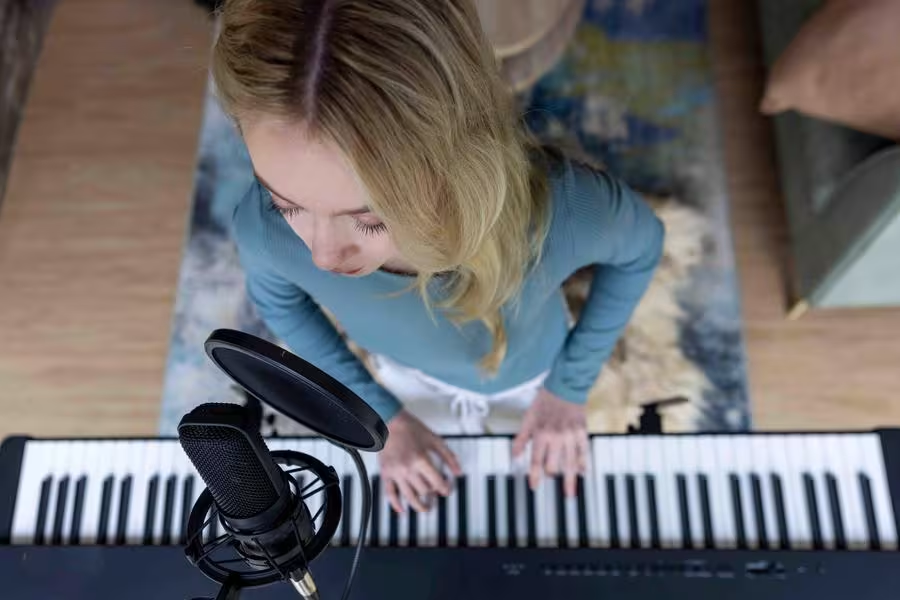
Discovering your voice type is one of the most pivotal steps in your vocal journey. Many singers begin by asking: How do I find my voice type? While it is possible to determine your voice type yourself, you should always check with a trained professional—such as a voice teacher, vocal coach, or choir director.
Your voice type isn’t only about hitting the highest and lowest notes—it also involves timbre, tessitura, and the natural qualities of your sound. Understanding these elements will help you choose vocal exercises, repertoire, and techniques that support your growth.
Why Knowing Your Voice Type Matters
When you know your voice type, you can tailor your vocal warmups, practice habits, and song choices to foster growth and development. It helps you avoid strain, play to your strengths, and stretch your vocal possibilities safely. As you explore your voice type, keep in mind that it may evolve, especially as you mature.
Remember: Your voice type isn’t fixed forever. As you continue vocal training or take online voice lessons, your voice may evolve. Think of this as part of the journey rather than a final destination. Don't be afraid to "sound silly" or sing the wrong note; these missteps are essential stepping stones toward improvement. While others might offer opinions, it's ultimately up to you to truly understand your voice's capabilities.
Watch: How to Find Your Voice Type
This short video will walk you through the basics of identifying your vocal range and recognizing the qualities that make your voice unique. Once you’ve watched, return to the steps below to try your own “singing voice test.”
Steps to Identify Your Voice Type
1. Warm Up
Sit at a piano or open a digital keyboard app and begin with gentle exercises, like humming or lip trills. Sing two- or three-note phrases, first descending and then ascending.
2. Find Your Range
After warming up, gently work down the piano keys (or use a digital keyboard app) to discover your lowest comfortable note. Then, move upward to find your highest comfortable note.
Use the chart below as a general reference point. It shows the general ranges associated with common voice types. Keep in mind, though—range is only one piece of the puzzle. To truly identify your voice type, you’ll also need to consider timbre, tessitura, and how your voice transitions through registers.
| Voice Type | |
|---|---|
| Soprano | C4–C6 |
| Mezzo-soprano | A3–A5 |
| Contralto or Alto | F3–F5 |
| Tenor | C3–C5 |
| Baritone | G2–G4 |
| Bass | E2–E4 |
Think of this chart as a starting point, not a final answer. Many singers may find that their voices don’t fit neatly into one category, and that’s perfectly normal. With continued practice and guidance, your voice type will become clearer over time.
3. Listen to Your Sound
Pay close attention to the natural color of your voice. Is it bright and light? Or warm and dark? These tonal qualities can give important clues about your voice type.
4. Determine Your Tessitura
Your tessitura is the “sweet spot” where your voice feels most at ease. Sing scales in different sections of your range and note where your voice feels the most comfortable and relaxed.
5. Identify Your Passaggio
Listen for the spots where your voice transitions between registers (chest, middle, and head voice). These areas of change are called your passaggi and play an important role in identifying your type.
6. Explore Different Genres
Try out songs from different styles—musical theatre, pop, classical, or jazz. Notice where your voice feels strongest and which genres highlight your natural sound.
7. Consult a Teacher
For the most reliable assessment, seek guidance from a voice teacher or coach who can help you accurately determine your voice type and suggest repertoire tailored to your unique sound.
Want to continue learning with Interlochen Online?
Find your perfect course now—the next session starts Oct. 26.


Recommended Voice Courses
Each online vocal course offers four weeks of instruction and personalized feedback from a professional vocalist.
Vocal Techniques 1
Unlock your potential with healthy techniques.
Vocal Techniques 2
Build your endurance, agility, and confidence.
Vocal Techniques 3
Sing with greater power and precision.
Take all three courses and earn a certificate from a world-renowned institution.
The Vocal Techniques certificate program is perfect for...
✔ Adults looking to boost their creative résumé and LinkedIn profile
✔ Teens who want to earn high school credit for their passion
What are students saying?
Students who enrolled in vocal courses and certificate programs rated their experience 4.2 out of 5.
How does it work? Sample a course for free.
✔ | Expert Faculty Receive direct, personalized feedback from a professional artist. |
✔ | Real Growth Develop artistic skills that are important to you in 30 days. |
✔ | Collaborate Connect with peers and instructors on your projects—or just for fun. |