
College credit is now available with certificate programs! Enroll now before prices increase Oct. 26.
Common (and Avoidable) Pre-Production Mistakes
4 Tips from a Professional Film Director for a Successful Production
By Drew McClellan, Interlochen Online Course Instructor
Drew McClellan is the Cinematic & Visual Arts Department Chair at the Los Angeles County High School for the Arts and a U.S. Presidential Scholar Distinguished Teacher.

Before the cameras roll, some of the most important work of filmmaking happens in pre-production. Whether you’re an aspiring director taking your first film course or a seasoned filmmaker leading a full crew, careful preparation is the difference between a smooth production and a stressful scramble. From script analysis to scheduling, each step builds the foundation for creative success—and skipping even one can jeopardize the entire project.
Here are the most common pre-production mistakes I see filmmakers make and how to avoid them.
1. Neglecting a thorough script analysis
Never skip a thorough breakdown of your script. A comprehensive and careful understanding of the script is the foundation of efficient planning—it identifies key production elements like locations, props, wardrobe, special effects, and time-of-day requirements. Not taking the time to highlight these components can lead to underestimating costs, misallocating resources, or forgetting crucial elements entirely. The script breakdown is more than a list; it’s a roadmap that informs budgeting, scheduling, hiring, and creative decisions. Without it, there’s no clarity in direction, and the production can quickly fall apart under stress.
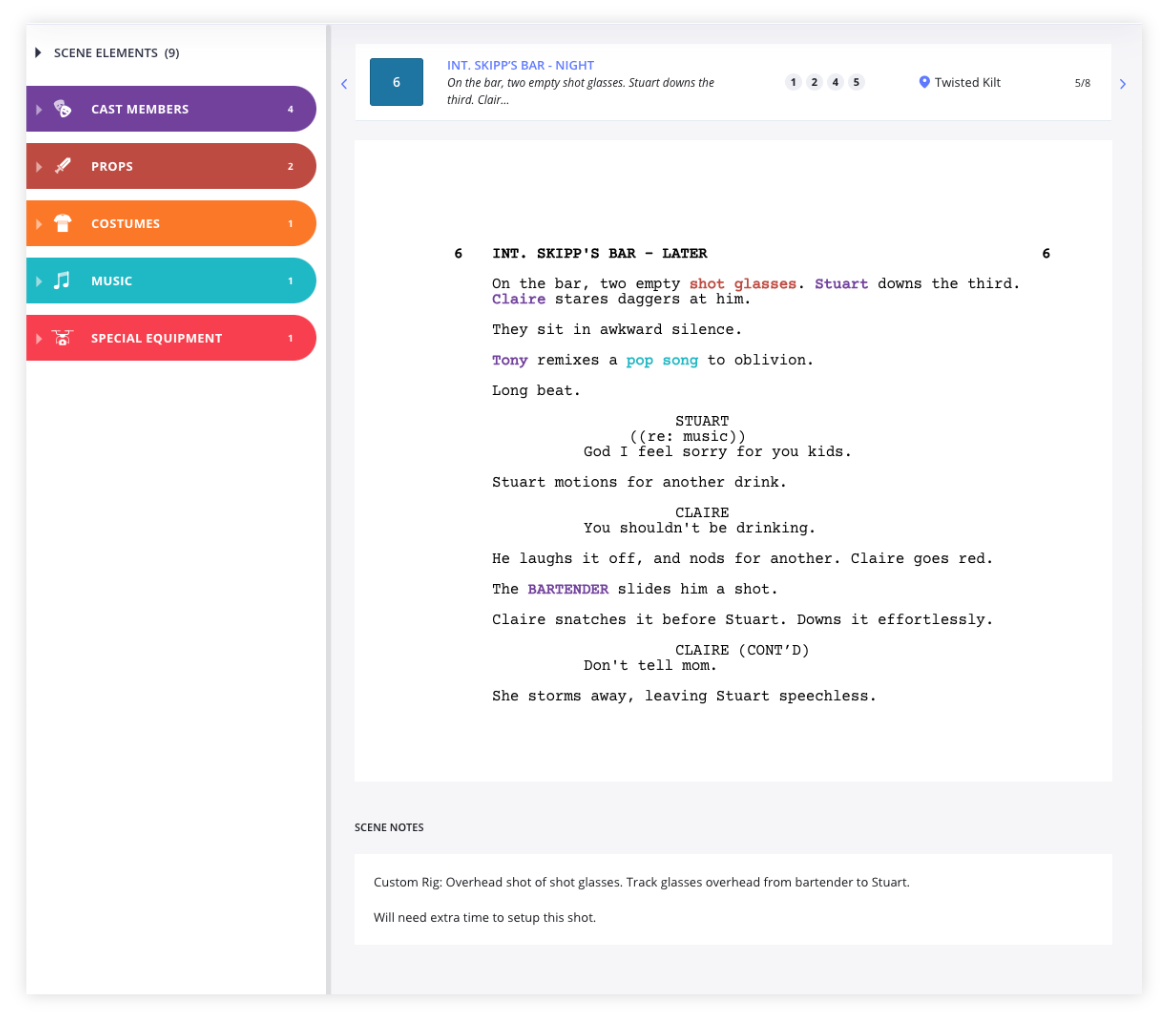
This example script shows how on just one page we've broken down the location, cast members, props, costumes, music, special equipment, and additional notes that will serve us well on shooting days.
2. Not itemizing a detailed budget
Accounting for pre-production, production, and post-production costs—including contingency funds—is essential for keeping the film on track and investors happy. Many filmmakers underestimate casting and crew expenses, neglect permitting or insurance fees, or fail to factor in travel, meals, and gear rentals. This leads to overspending or production delays. Proper financial planning, complete with cash flow projections and expense monitoring, demonstrates not only professionalism but also a serious commitment to finishing the project.
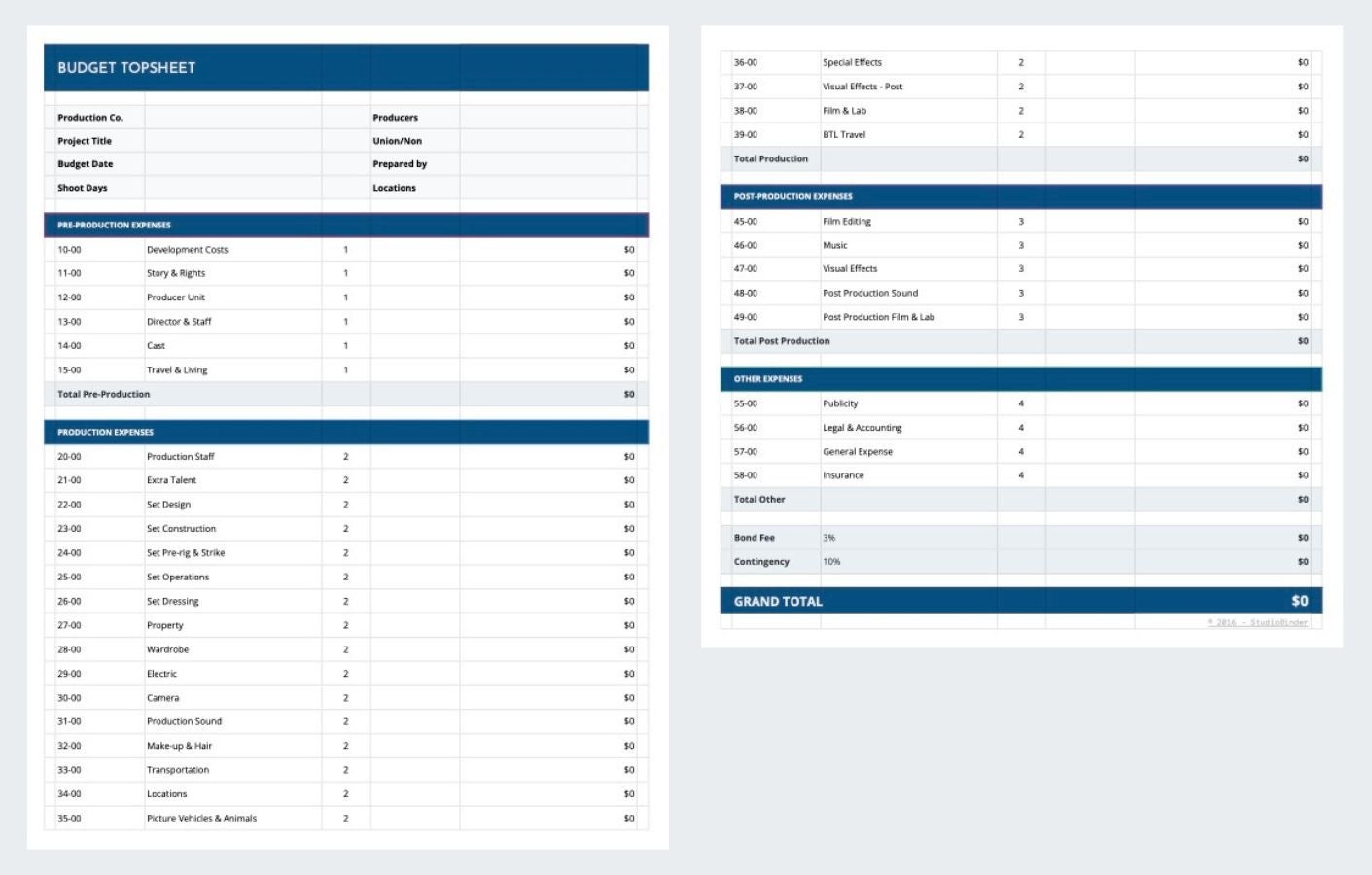 This topline budget shows many budget considerations across pre-production, production, post-production, and miscellaneous costs.
3. Rushing casting and securing the wrong talent
Casting can be mishandled early on, especially when filmmakers don’t clearly define character needs or fail to hold chemistry reads for key roles. Conducting auditions with little preparation, skipping collaborative input from directors and producers, or offering unclear feedback are avoidable errors that slow down the process and compromise performance quality. Managing actor expectations about the role and shooting requirements ensures a smooth transition into production.
4. Building a disorganized schedule
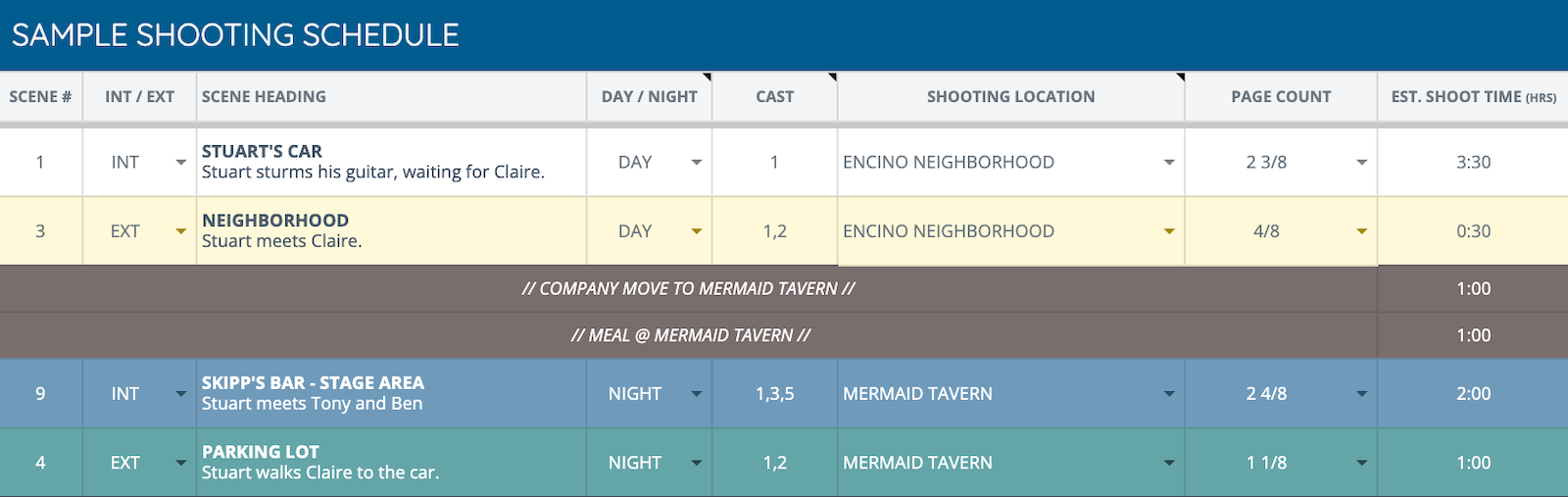
Poor scheduling—whether it’s underestimating shoot days, ignoring cast availability, or failing to plan for weather conditions—is one of the most preventable mistakes. A detailed shooting schedule that uses time efficiently and balances the needs of the cast and crew helps ensure deadlines are met and morale stays high. It also reduces the likelihood of costly reshoots or burnout.
These mistakes—rushed breakdowns, unclear budgets, disorganized casting, poor scheduling—are all avoidable. Pre-production is your opportunity to build a blueprint for success. Skipping these steps may seem like a shortcut, but it will cost time, money, and creative momentum later. Taking the time to plan properly dramatically increases the chances of a successful shoot—one that doesn’t rush the creative process and allows for everyone on set to do their best work. This attentive planning will make your actors, crew, and investors— and your future audience—very happy!
Want to continue learning with Interlochen Online?
Find your perfect course now—the next session starts Oct. 26.


Recommended Film Courses
Each online film course offers four weeks of instruction and personalized feedback from a professional screenwriter, director, or producer.
Screenwriting for Film 101
Write screenplays that captivate audiences.
Film Production 101
Gain confidence in every stage of production.
Film Editing 101
Shape the story with cinematic editing techniques.
Take all three courses and earn a certificate from a world-renowned institution.
The Filmmaking certificate program is perfect for...
✔ Adults looking to boost their creative résumé and LinkedIn profile
✔ Teens who want to earn high school credit for their passion
What are students saying?
Students who enrolled in film courses rated their experience 4.5 out of 5.
How does it work? Sample a course for free.
✔ | Expert Faculty Receive direct, personalized feedback from a professional artist. |
✔ | Real Growth Develop artistic skills that are important to you in 30 days. |
✔ | Collaborate Connect with peers and instructors on your projects—or just for fun. |